

Budapest is among the most exquisite cities in Europe and it’s a market I know well, having invested in real estate here for several years.
However, is investing in the Budapest real estate market still a good idea? More importantly, is 2026 the right time to buy property in Hungary especially with all the political change that is taking place?
We will explore these questions by delving into the Budapest real estate market, offering property investors an in-depth analysis, key insights, top neighborhoods and the potential yields of rental properties.
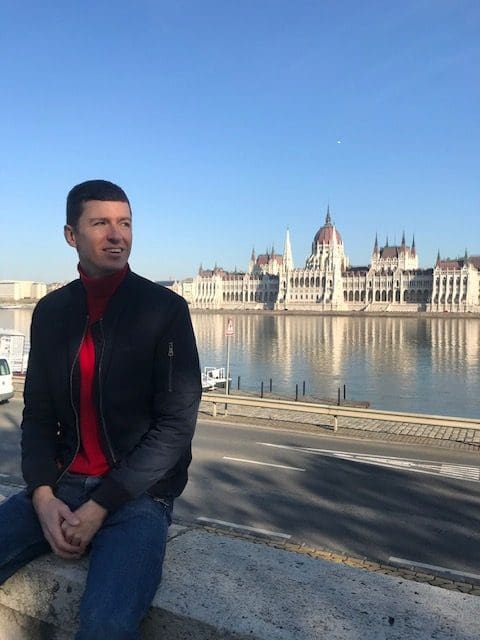
Table of Contents
Overview of Hungary’s Economy
Hungary has had a spectacular run on the economic front
In 2010, the opposition led by Victor Orban came to power. He was elected on a free-market and populist platform. Orban suffers a notoriously bad reputation in international circles and in the Western press for his anti-immigration stance, but he did enact economic reforms that boosted the economy.
On the back of economic reforms and (free) money from European Union cohesion funds, Hungary boomed between 2014 and 2019 and became one of the top-performing economies in Europe. Its real GDP growth was almost 5% in both 2018 and 2019, which is reminiscent of booming South East Asian economies. Since Covid and the Ukraine war, Hungary, along with much of Europe, has been stagnating, though it is doing better than many of its neighbours.
The European Union (EU) Played a Large Role
It’s all too easy to give Orban full credit for the economic boom. While you can’t deny that his policies played a significant role, the flow of free EU money should not be underestimated.
In 2018, Hungary contributed €1.1 billion to the EU budget (0.7% of Hungarian GDP), but received a cool €6.3 billion from the EU (5% of Hungarian GDP).
When you drive around Hungary and marvel at all the new highways, stadiums, hospitals, schools, and great infrastructure, rest assured that it is not because Hungarians are so productive, but rather because their politicians were very good at getting EU money. German, Austrian, Dutch, and Scandinavian taxpayers have played a disproportionate role in the rebuilding of Hungary.
Nationalistic Hungarians claim it as their own work and proof of their genius. European liberals claim it as a demonstration of their solidarity and moral superiority. In reality, the small business owners of Utrecht and Stuttgart contributed more than their fair share to rebuilding Hungary.
What will be the impact of Orban’s loss?
I don’t want to be too political but facts must be stated along with the investment theses.
- Orban did not lose because of his foreign policy and pro-business attitude. He lost because of perceived corruption in his immediate circle.
- Peter Magyar, the opposition leader who became prime minister in the May elections, ran on a platform of “No big difference with Orban, except that we won’t antagonize the EU and we will clean out corruption”
Theoretically, this should be the best of both worlds. Is it all just a politician’s promise? Time will tell.
What do we know for now? The government has made two big moves for now.
- Taking a pro LGBTQ+ and EU stance
- Taking a neutral stance on Ukraine, a departure from their previous unsupportive policy
The immediate result of these two policies has been the release of €16 billion of frozen EU funds which will now make their way into the Hungarian economy.
The big question mark is the continuity of Chinese investment, which up to now has been massive. in 2025 over half of FDI flowing into Hungary was from China and in 2023 Hungary received 44% of Chinese FDI into the EU ahead of France, Germany and the UK. Will the current government be able to get the best of both worlds? EU and Chinese money? Time will tell, though it’ll be very hard to balance.
Hungary also had special carve-outs with regards to Russian energy. The current government seems keen to avoid the topic as much as possible to retain greater energy security. Will they be able to in the face of EU pressure? Time will tell.
Short and medium-term impact of elections on the economy: Positive
Long-term impact of elections on the economy: Unknown
Discussion with Benedek on the impact of elections on the Budapest real estate market
Get in touch with Benedek my real estate buyer’s agent in Budapest.
The Budapest Real Estate Market: Full Analysis
A big decision when making a real estate investment in Budapest, Hungary, is the Hungarian Forint
The Hungarian forint is a very volatile currency.

The election of Magyar strengthened the Hungarian Forint in anticipation of institutional inflows as well as EU money. Some people are also betting that Hungary will join the Euro, which would be hugely bullish real estate, though the long-term fundamentals of such a move in a country accustomed to devaluations is very questionable, as Italy can attest.
Historical prices of the Budapest real estate market
The real estate investment market in Budapest, Hungary absolutely boomed from 2015 to 2019 before dropping in real terms during Covid. The market has since continued its upward march. Be mindful that these numbers are in HUF.

A boom driven not only by fundamentals but also by subsidized mortgages under the Orban goverment
Subsidized mortgages shot up in the years prior to the elections.


This is a big catalyst for housing in Hungary.
The reality is that Hungary still has an under-levered real estate market, though it is gradually changing.

Will Peter Magyar continue these policies? He will likely wind them down gradually judging by recent comments from the Central Bank and the cost to the budget of these policies.
Convergence is still the main thesis. Real wages are surging.
The main thesis for CEE countries like Hungary is that they will gradually converge economically with their Western counterparts. This part of the thesis is still going strong.
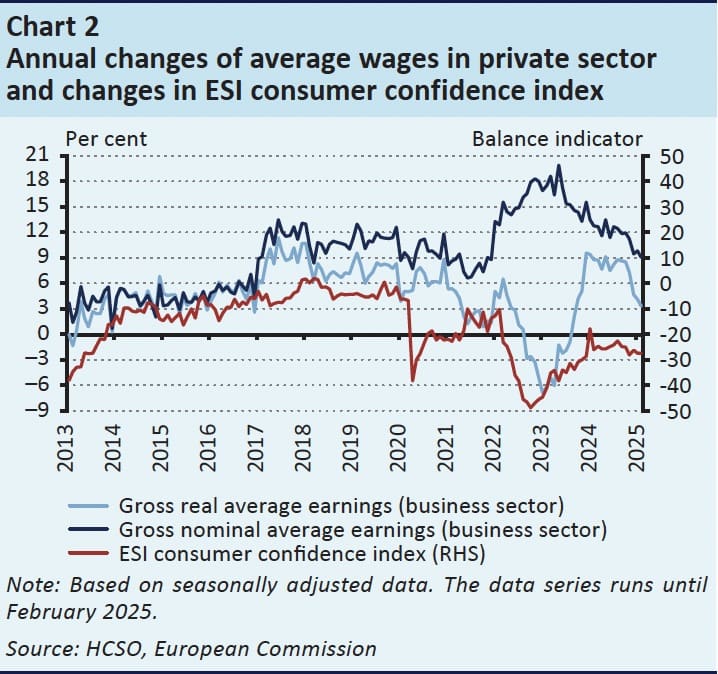
Consumer confidence is up and interest rates are down. More flows into real estate are inevitable.
Though affordable in absolute terms, prices are stretched for locals
Real estate prices in Budapest are cheap in absolute terms but have become somewhat disconnected from local purchasing power.

As an investor, this is not the only factor to consider. Much of the housing stock in downtown Pest, for example, targets higher-income foreigners who stay short and/or long-term in Budapest. Also, the low regulatory and tax environments make Budapest attractive to investors.
For example, for my 2-bedroom apartment in the 5th district right next to parliament, I pay yearly property taxes of about 200 euros. This amount is fixed in HUF and hasn’t changed for a few years.
So sure, Brussels may have a better price-to-income ratio, but good luck with property taxes, income taxes, kicking tenants out when they don’t pay, and with all the Green policies that can be very expensive for landlords.
Not enough real estate supply available
On the other hand, Hungary has the lowest new housing construction rate in Europe.
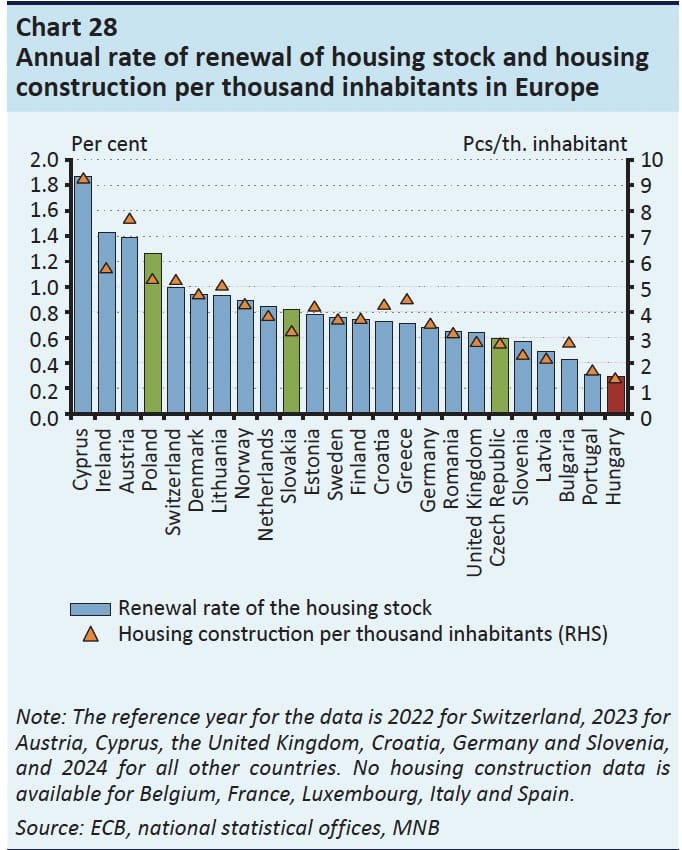
This is one of the core advantages of investing in the center of a city such as Budapest. Because of extremely strict zoning laws to preserve the gorgeous historical character of the core city, supply is inherently limited. This contrasts with cities such as Warsaw where high-rises keep popping up everywhere.
Limited supply is inherently bullish for real estate investors in Budapest.
There are forecasts that dwellings are expected to increase, and Peter Magyar has annouced that much will be done to increase supply, but this will come from a very low base, and with a tight labour market.

Budapest is middle of the range in terms of rent affordability in Europe
Rent eats a large chunk of locals’ income. Having said this, when you buy in the center of Budapest and target foreigners, you live in a different reality. International people moving to Budapest generally have higher incomes.
In my 10 years of owning real estate in Budapest, I never had Hungarian tenants. I’ve had Westerners, Koreans, well-off Eastern-bloc people, wealthy Africans and Middle Easterners.

Airbnb restrictions
The reality is that Budapest lacked adequate hotel capacity to satisfy international arrivals, so the government let the Airbnb boom take place. However, as capacity increased and housing affordability became an issue for locals, it became politically wise to implement Airbnb restrictions. Anti-Airbnb laws of various degrees were passed.
It varies based on the districts. Some districts are strict, and others are not. Some require a permit, others require that your homeowner’s association allows short-term lets in your building, and the rest ban it outright.
Gone are the days when you could just show up in Budapest, buy an apartment, and put it on Airbnb. This is one of the biggest pitfalls to avoid when making a real estate investment in Budapest.
There has recently been a lot of activism against Airbnb in Budapest. This trend is set to continue.
Again, this is why you need a good agent in Budapest. Most agents will tell you Airbnb is fine when in fact it’s not. A good agent will know the restrictions per district, know how to handle the home owners association, and how to get the municipal approval if required. This is why I work with Benedek my Budapest real estate buyer’s agent.
Importantly, even if an apartment has an Airbnb license, unless the apartment is owned by a corporation it is not transferable to the new owner. Maybe real estate agents lie to foreign buyers by saying “no problem this apartment has an Airbnb unit”. It does, but you’ll need to apply for a new one and could very well get rejected.
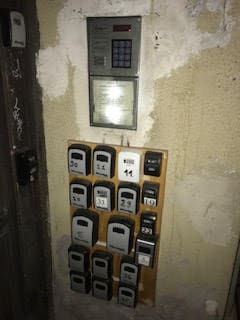
Overall though, I would be wary of making a real estate investment in Budapest that is purely focused on Airbnb, as the likelihood of further restrictions or outright bans remains significant.
Expected Yields
Beware of agents who make claims about net yields of 6-7%.
Once you take into account ALL real costs (maintenance, taxes, vacancy, etc) as well as the REAL purchasing costs (with taxes, legal fees, stamp duty, etc) the real returns on your investment are lower.
You can get about 4-5% net on Airbnb, and in the long term market after all expenses the yields are closer to 3%-4%.
Where to Invest in Budapest?
In which districts should you make a real estate investment in Budapest, Hungary?
If you were to make a real estate investment in Budapest, Hungary, it is important to have an understanding of the overall dynamics.
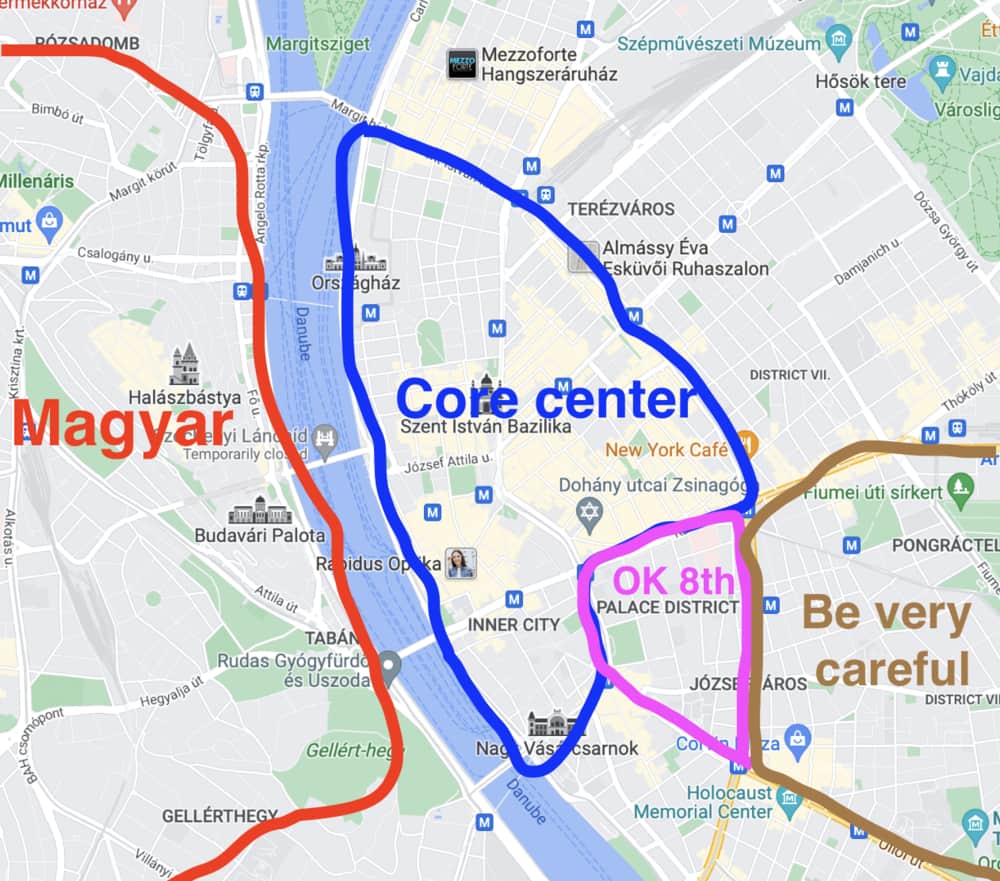
The Danube divides the city into two – Buda on the left and Pest on the right.
- “Magyar”: This is where Hungarians aspire to live. Proportionately fewer foreigners live on this side of the Danube, though this is where international schools are located. Overall, you’d tap into the local market here. It’s a good thing if you are bullish on Hungary in the long run.
- “Core center”: I am referring to the 5th, 6th, and 7th districts within the ring road. This is where you’ll find the Parliament, the Basilica, all the shopping areas, bars, clubs, Opera, Synagogues, etc. It’s generally where tourists spend most of their time sightseeing, eating, and drinking. This area has the highest concentration of Airbnb lets and foreigners living there to study, work and play.
Real estate in the 5th District
The 5th district is the AAA for foreign investors. It is the most expensive and premium district on the Pest side. It’s where the main tourist attractions are such as the gorgeous parliament and the Basilica. When I first started investing in Budapest in 2015 this is where I made my first investments.
However a common mistake foreigners make when investing within the 5th district is not differentiating between the micro areas. They use AI or some blog tells them that the 5th district is the best, and then find the cheapest option or don’t realize how the market differs from area to area. The big distinction is:
The 5th district close to parliament
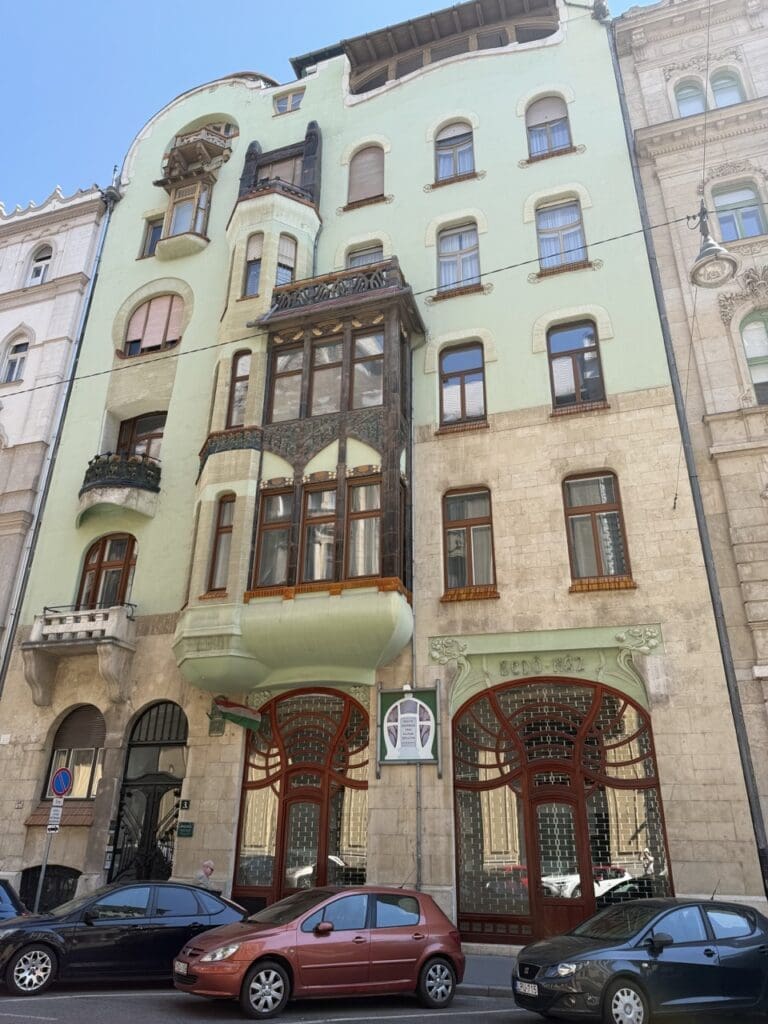
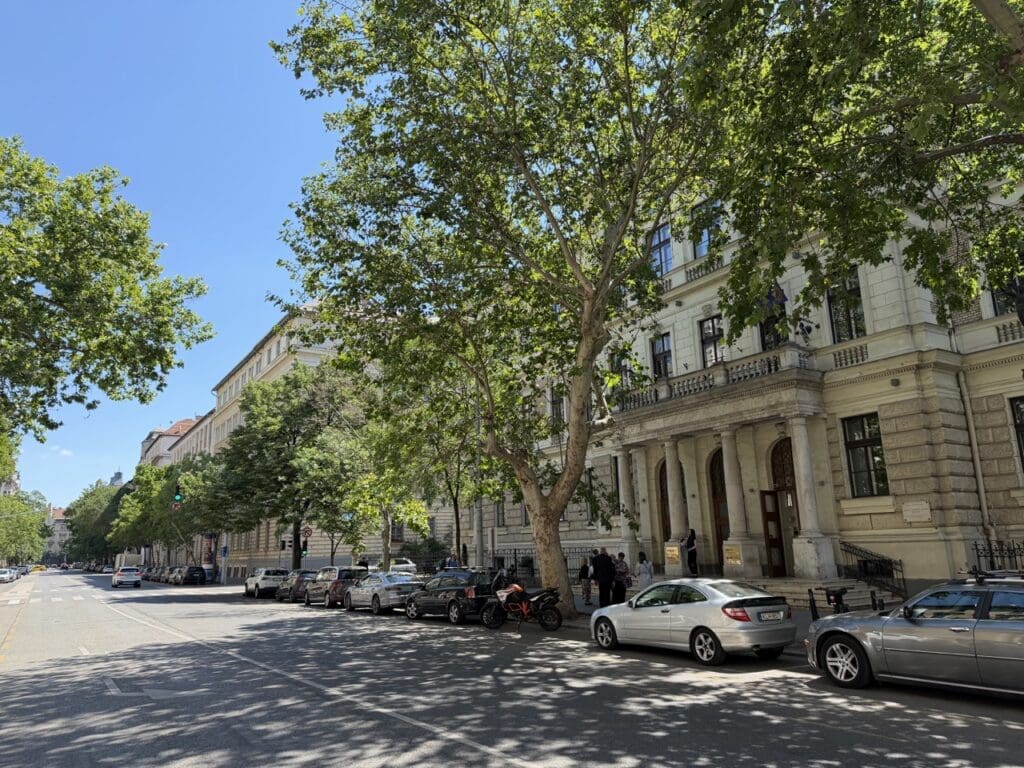
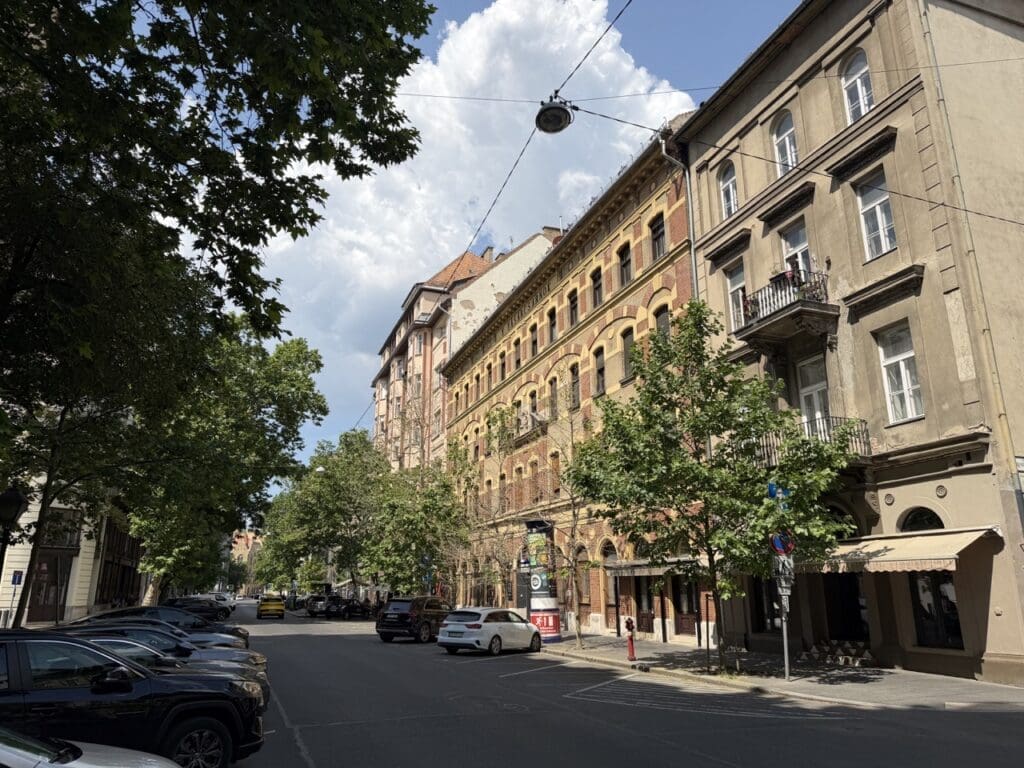
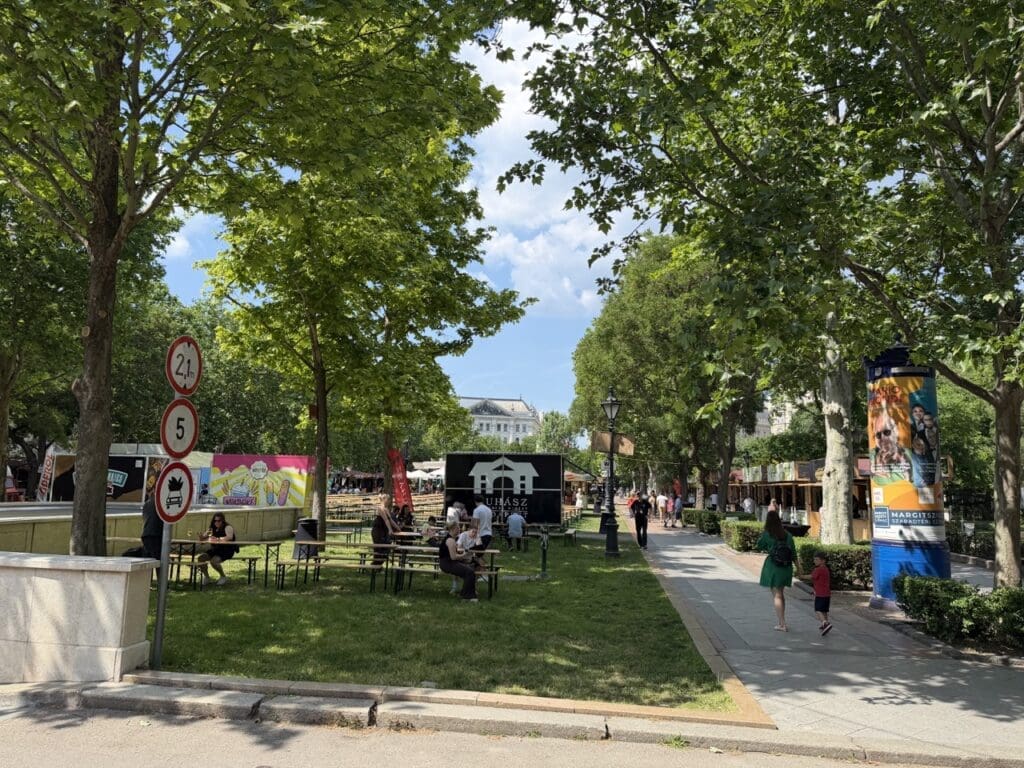
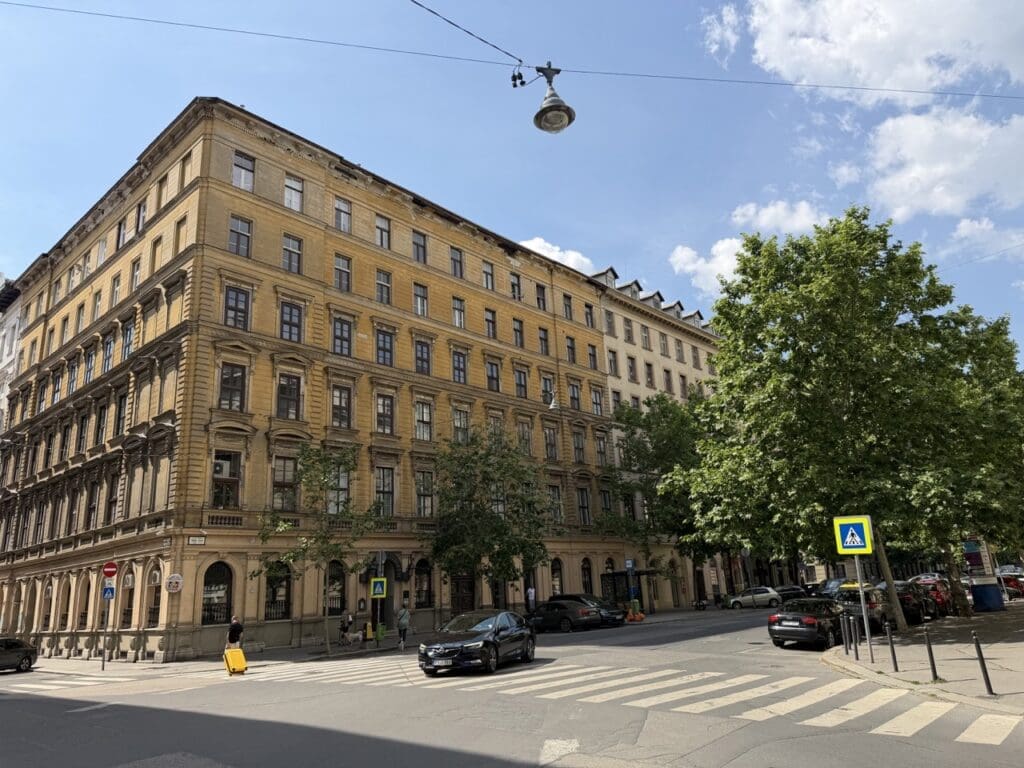
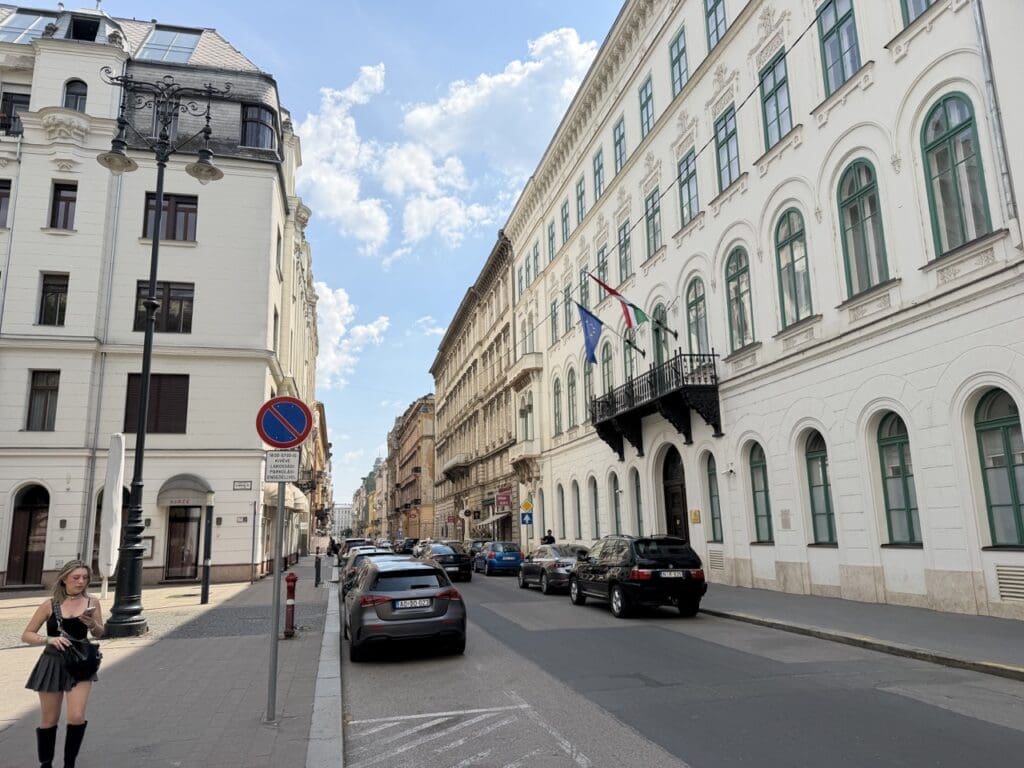
This area is full of government ministries, small parks for children and is very quiet. Parking is easy to find for residents and families love to live here. This is an extremely prime area to live in for both expats and wealthy locals. I’ve had a apartment here for over 11 years and my occupancy rate has literally been 100%. Not a single month of vacancy, even in between tenants.
The commercial side of the 5th district
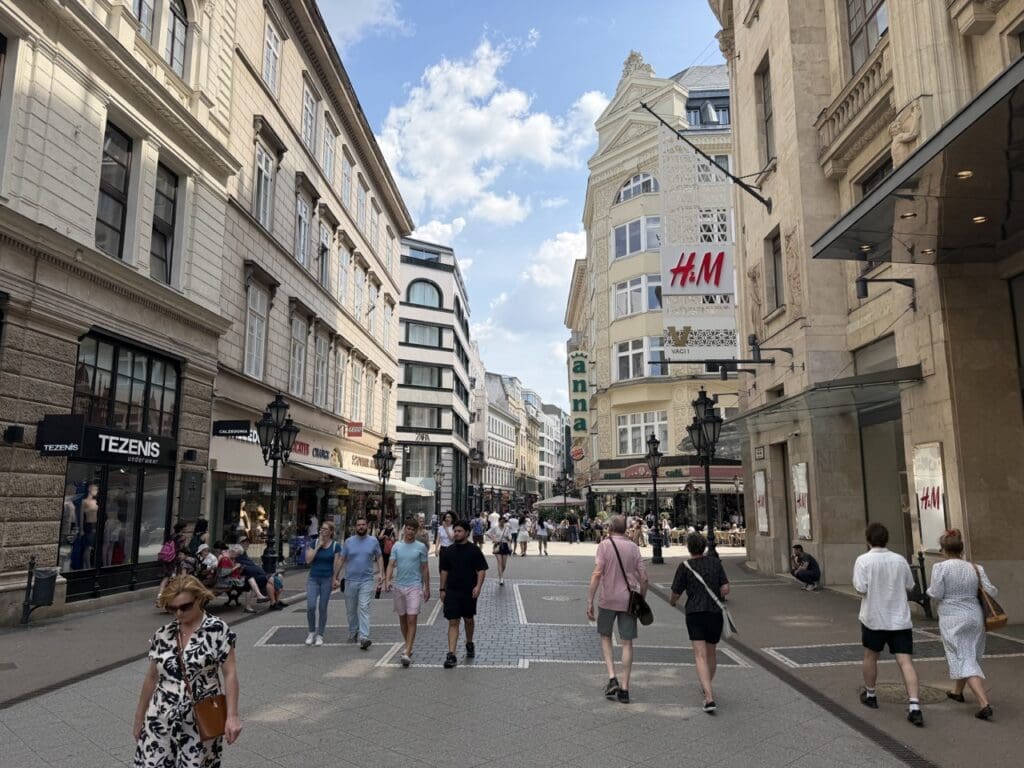
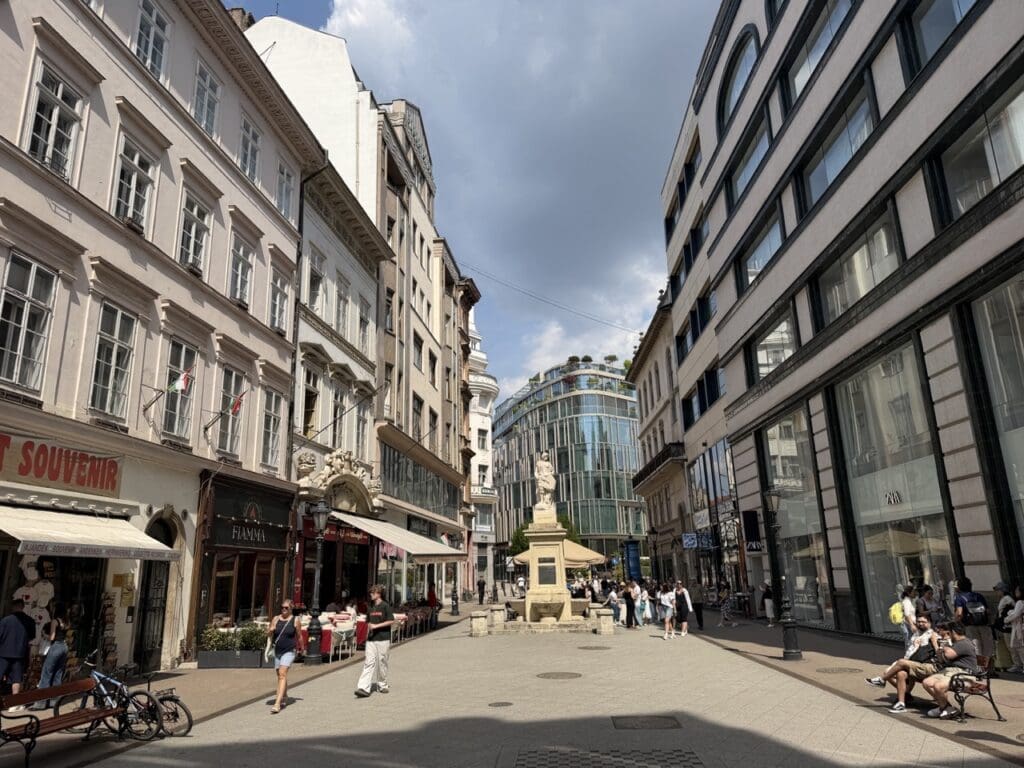
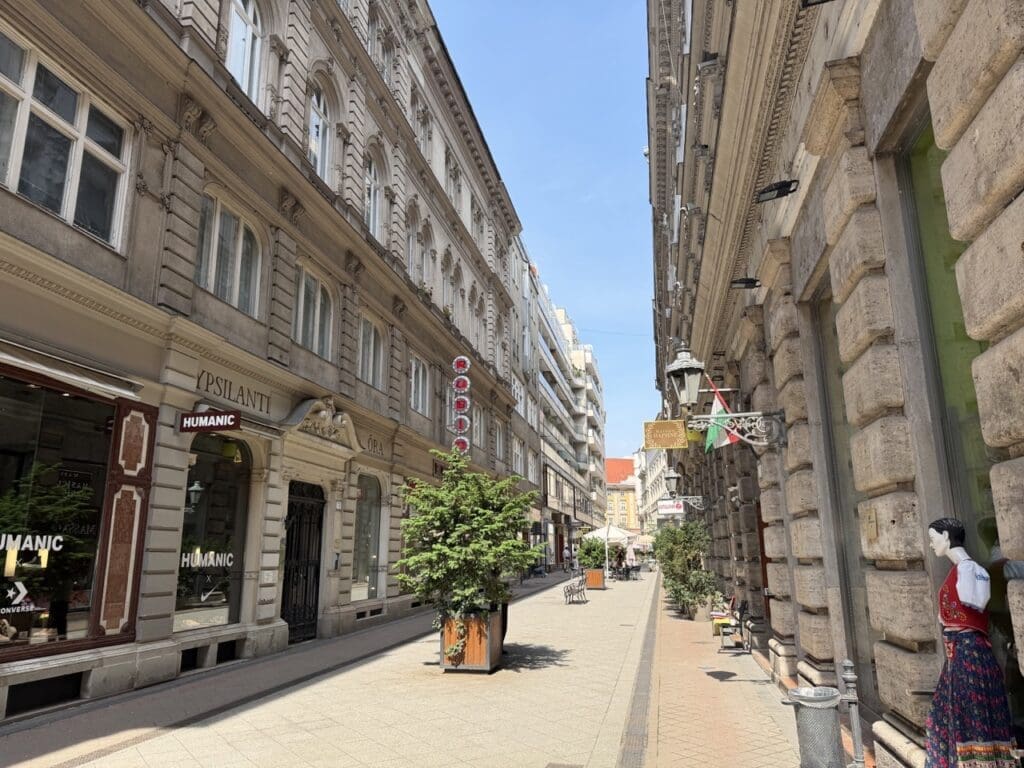
For some reason tourists end up spending more time here than they should when they first come to Budapest. I know I did. But once you live in Budapest you never set foot here.
It’s the tourist trap area of Budapest, with typical euro chain stores and tourist shops. Locals never really come here. Real estate is almost as expensive as in the other parts of the 5th district, but is clearly much less desirable to live in. And it’s not the Airbnb factor, as it is particularly hard to get an Airbnb license across the 5th district.
Real estate in the 8th District
One has to be extremely careful in the 8th district. Some parts are very premium, and others not at all. The price differences can be massive, so warning to those who focus a bit too much on “price per square meter.”
The “Palace District” within the 8th district
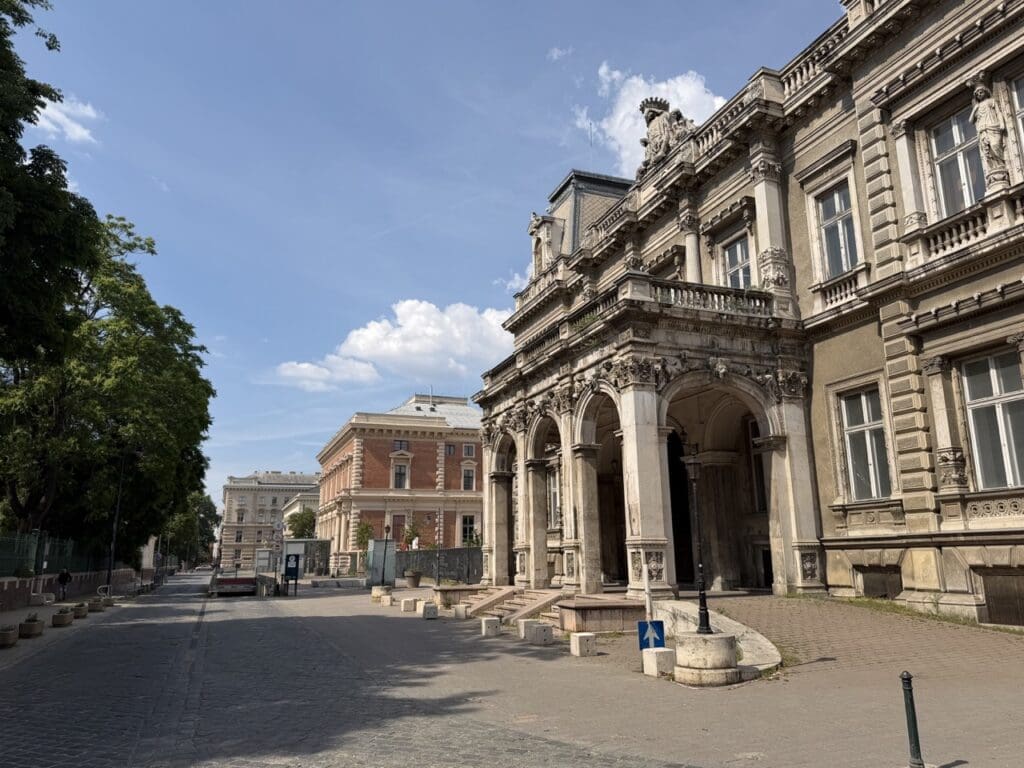
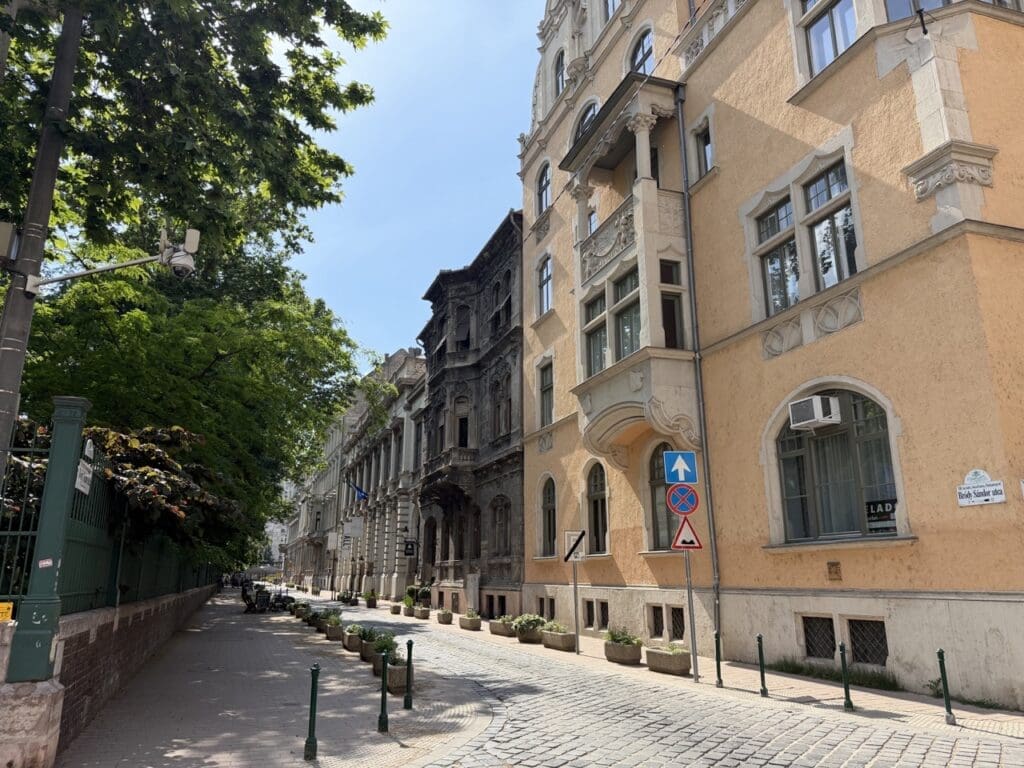
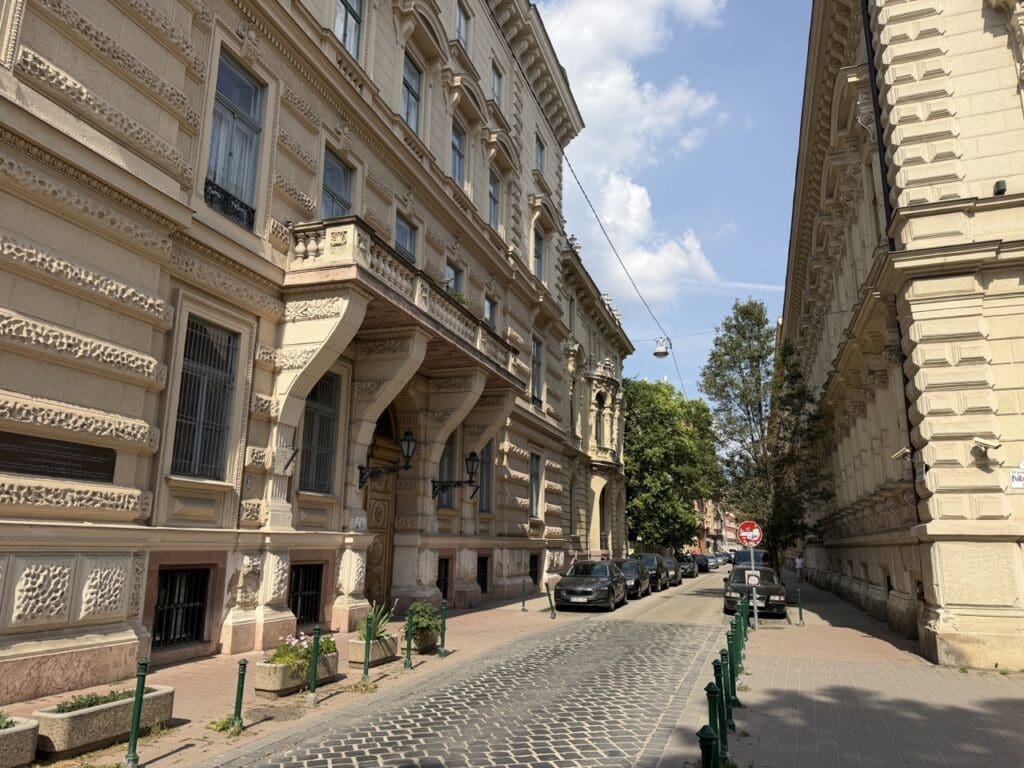
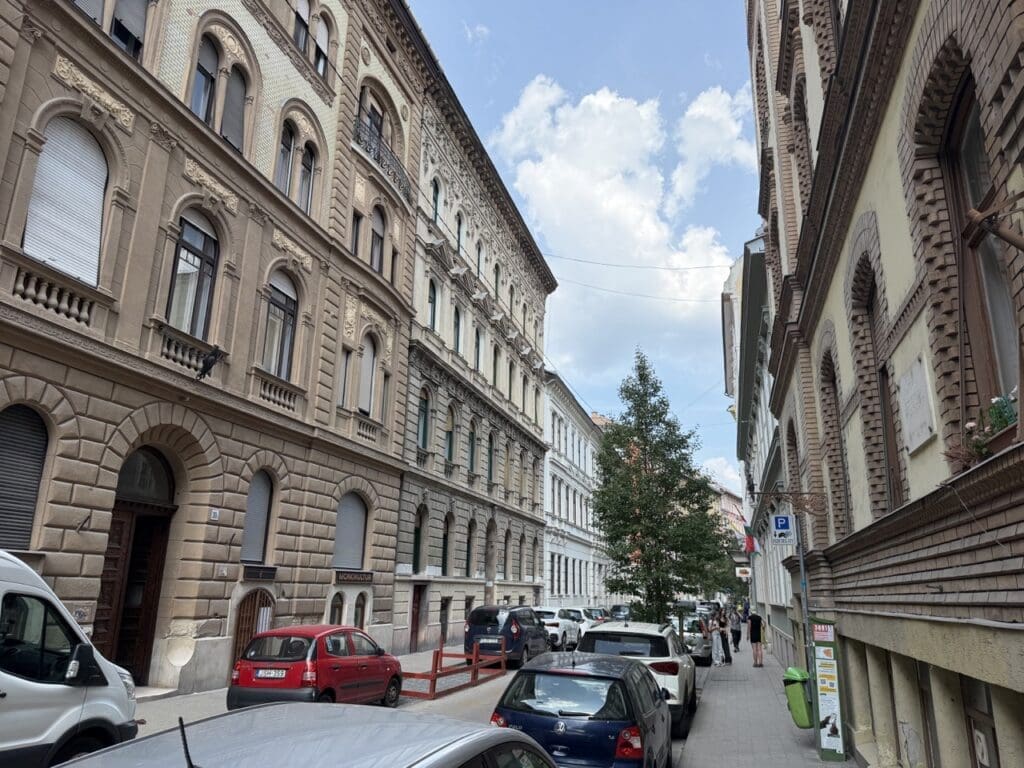
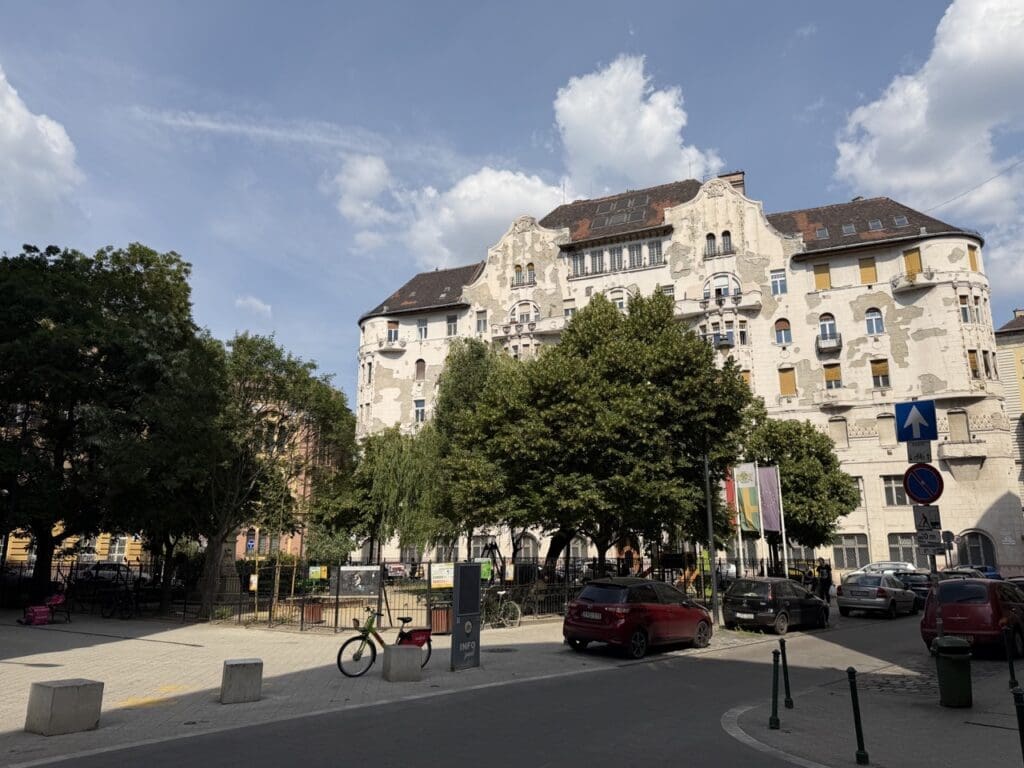
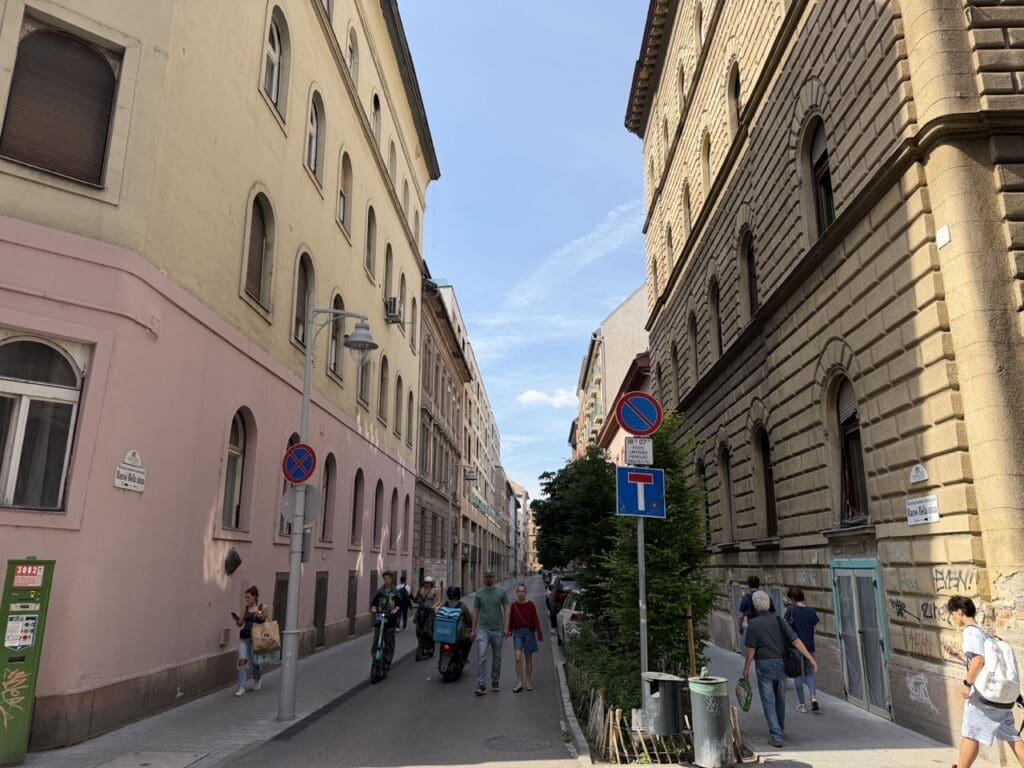
This area is very investable, and probably one of the most investable areas in town. Why? because you get a 5th district level quality environment with gorgeous real estate, restaurants, cafes and parks, yet at a discount because of the overall perception of the 8th district. The difference is not huge anymore, but is still worth it and doing Airbnb is much easier here based on local regulations.
The formerly dodgy areas of the 8th district
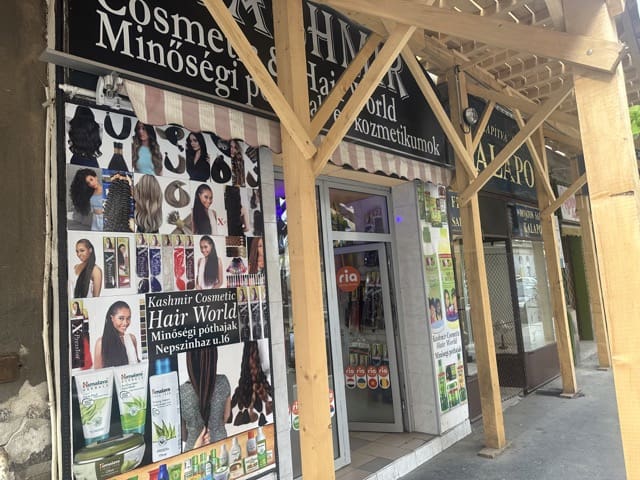
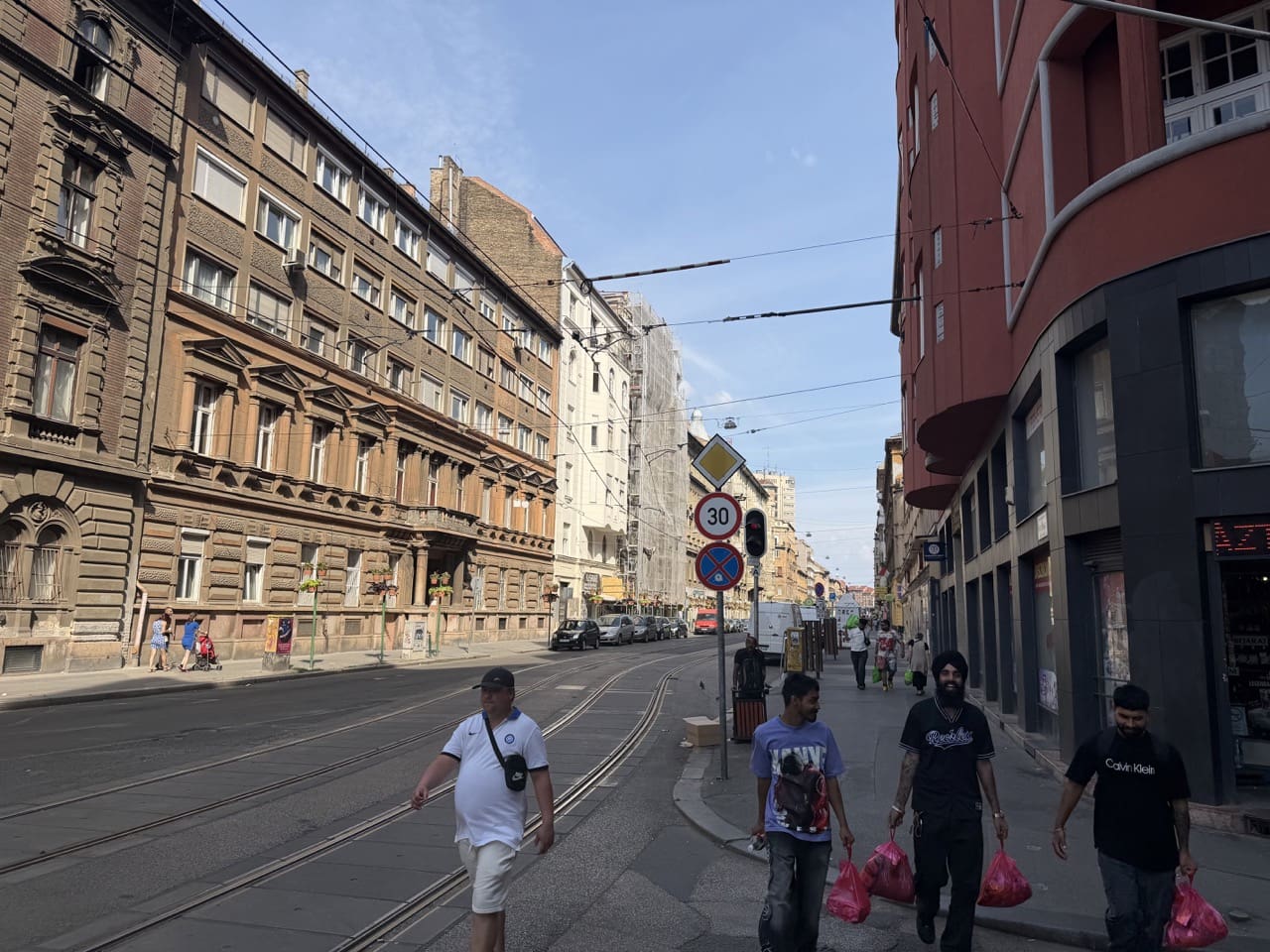
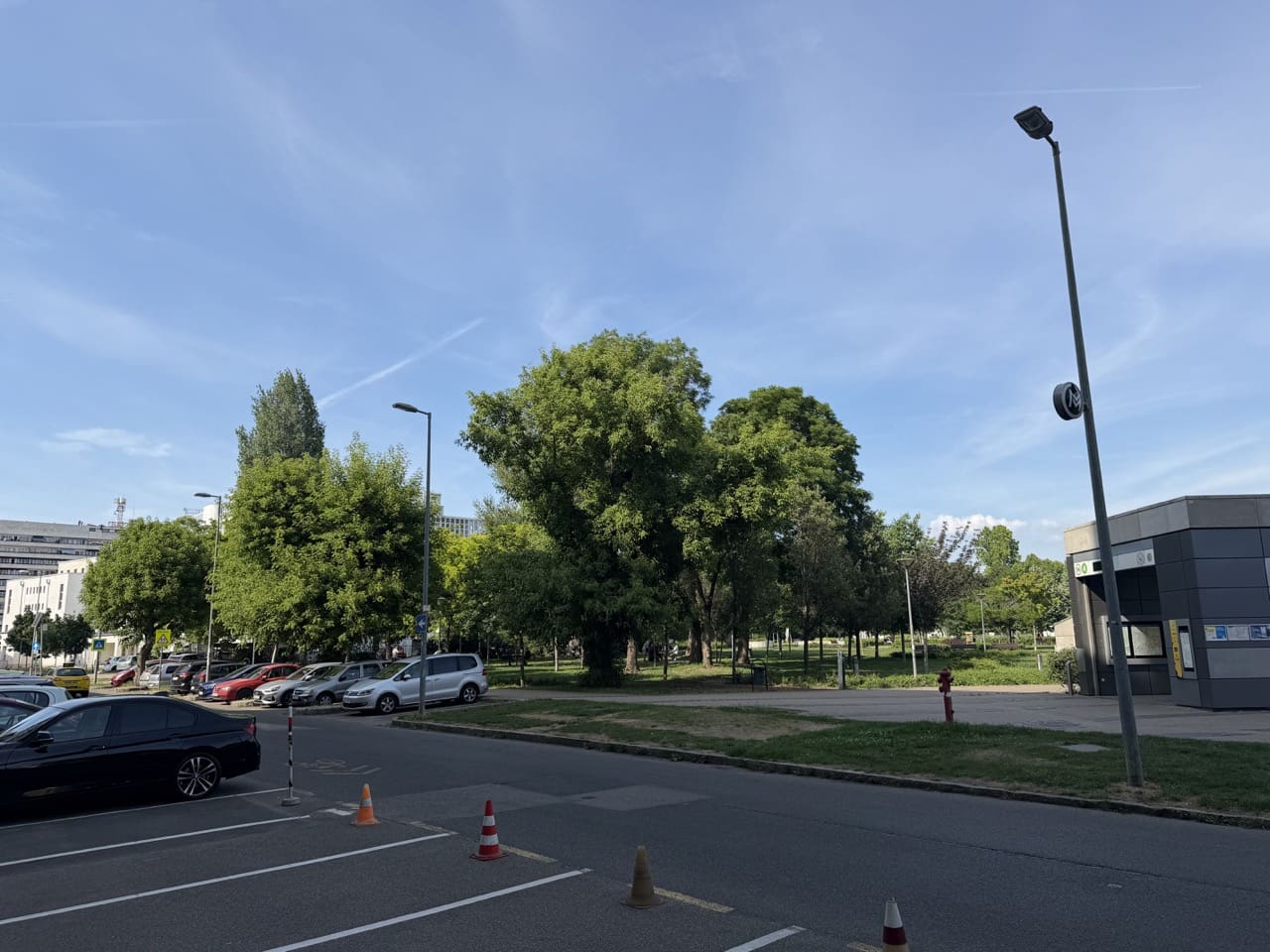
This is an interesting case study. If I had invested here in 2015 I would have made a lot more money than I did investing in the 5th and 6th districts.
It used to be a heavily Roma minority area. Many still remain, but over the years most sold and moved to outer districts of Budapest. Real estate speculators came in as well as a lot of government money to gentrify the area. The infrastructure is thus now very good, including a beautiful new park, but a new phenomenon has taken place.
Immigration from South Asia, Africa, the Middle East has chosen this district as its landing spot along with some parts of the 7th district. This comes with ethnic shops and people loitering around. There are zero security concerns at the moment, but judging by how such areas developed over time in Western Europe, it is a headwind of sorts.
Real estate in the 7th district
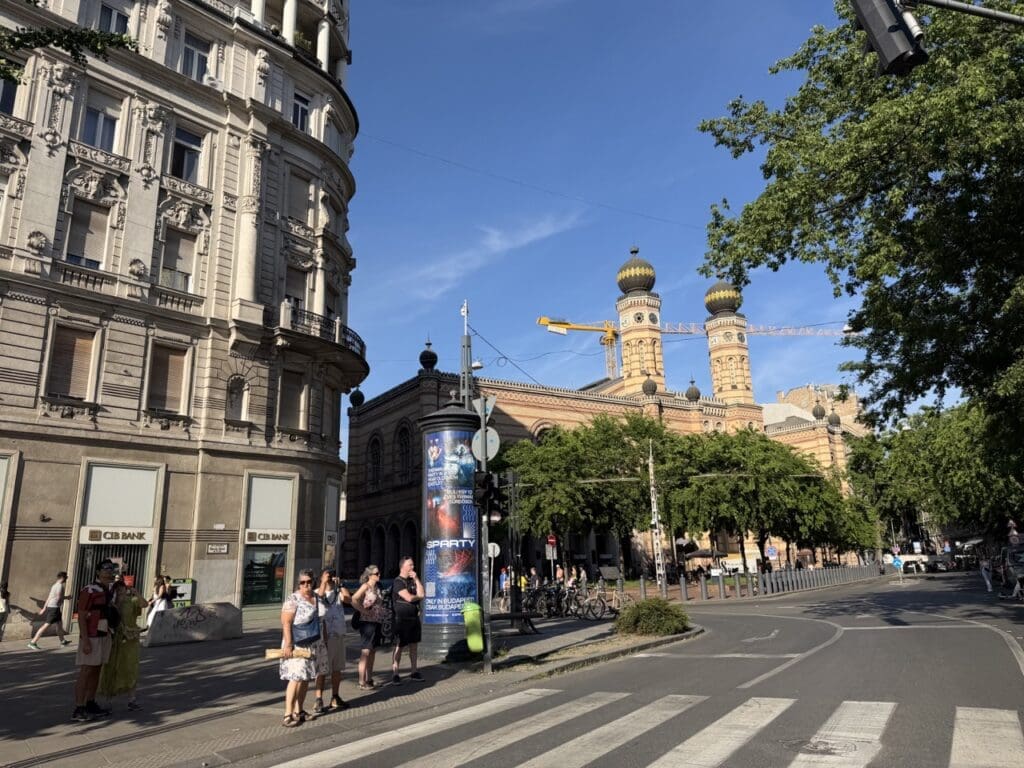
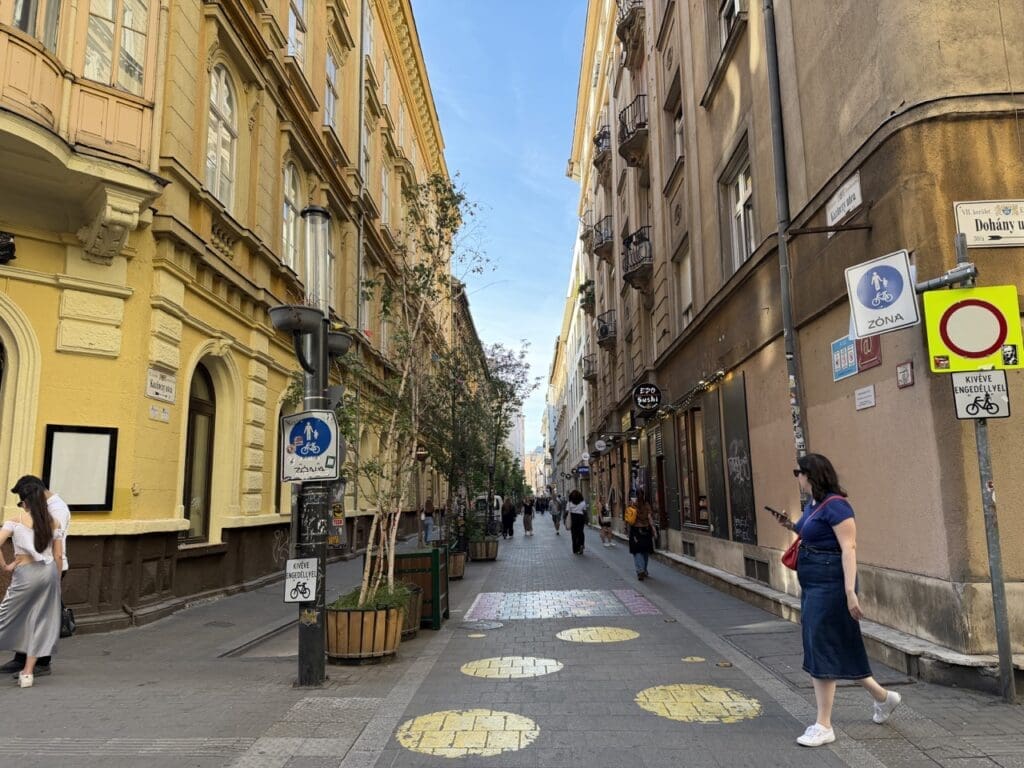
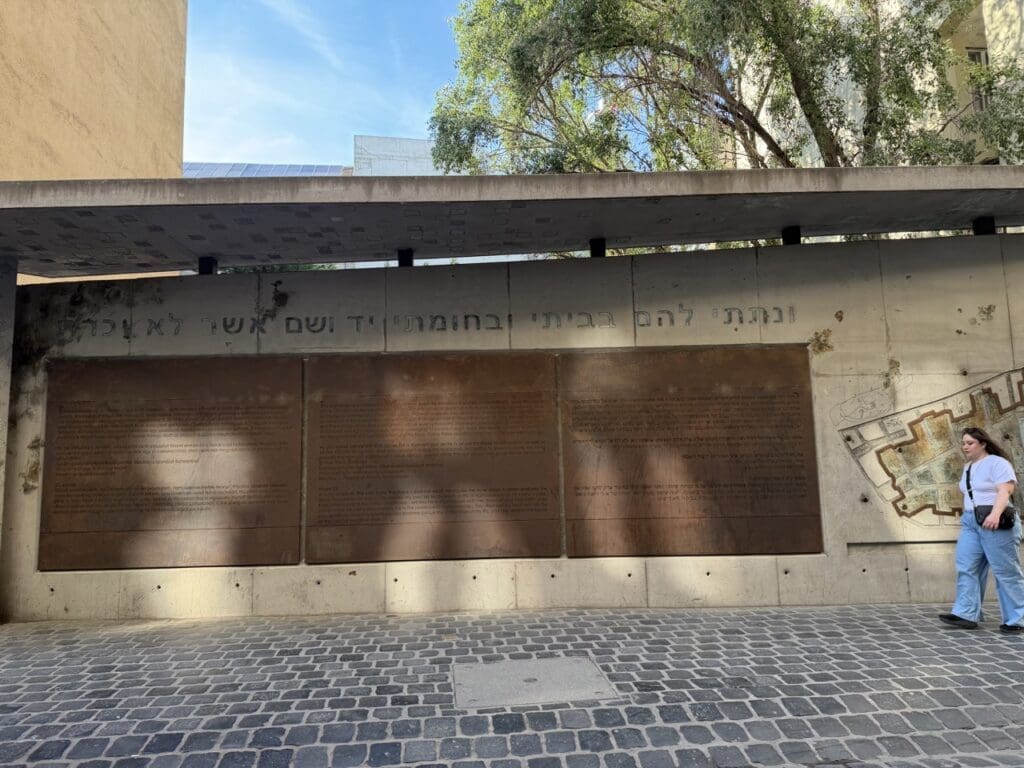
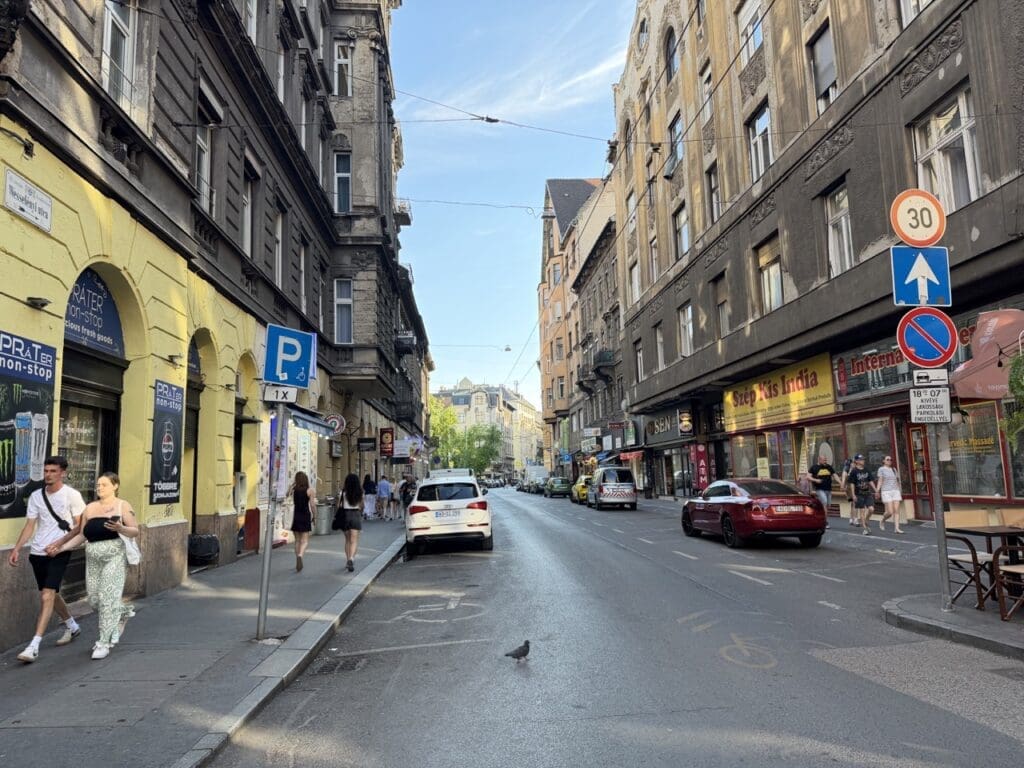
This is also a complex district. People like to say “The Jewish District.” Sure, but it’s more complex than this.
The Jewish area
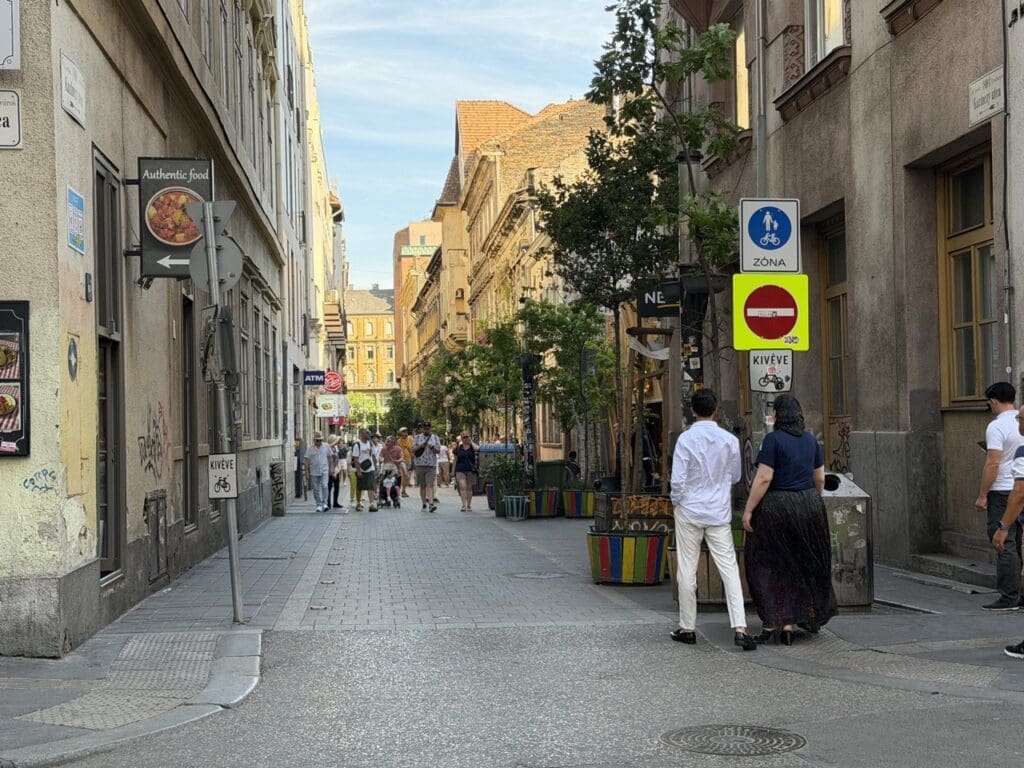
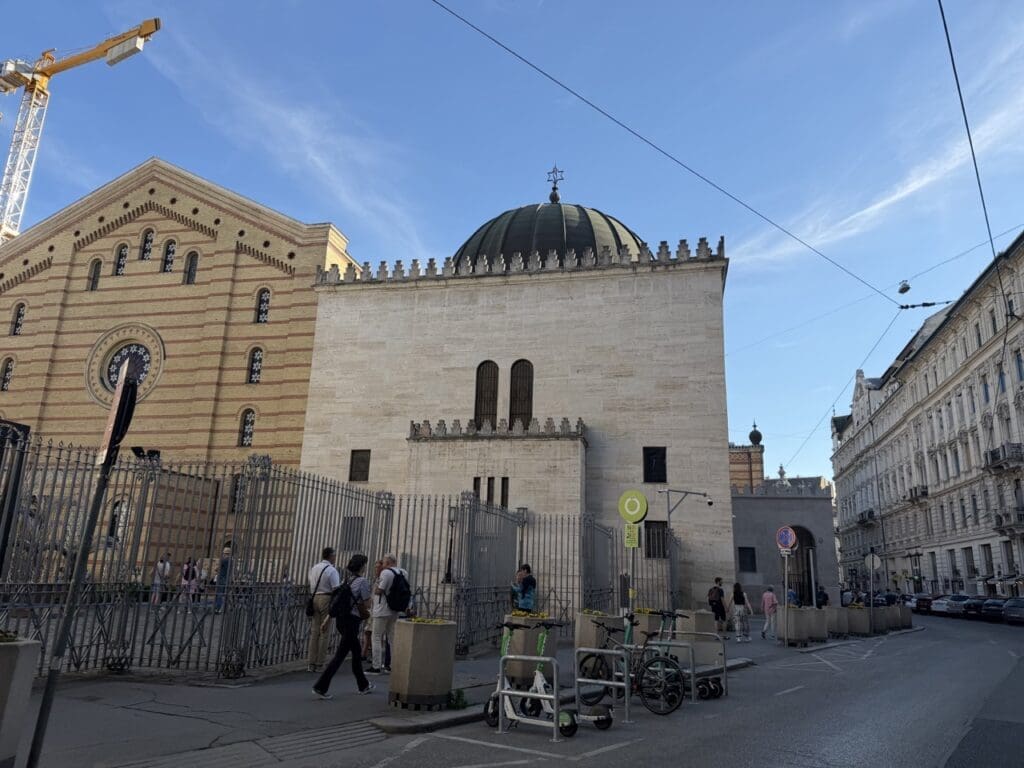
Avoid investing here at all cost. There are two phenomenons:
- The whole area caters to screwing over tourists. Bars and restaurants that cater to tourists yet offer generally poor quality service and food compared to other districts for similar prices, Shoah memorials, tourist shops, etc . The area is loud and not particularly clean. Even the synagogues you have to pay to get in.
- A lot of Israeli investment into real estate which pumps up prices to a level that just isn’t worth it compared to the 6th district for example which is much more pleasant.
The “8th districtification of the 7th district”
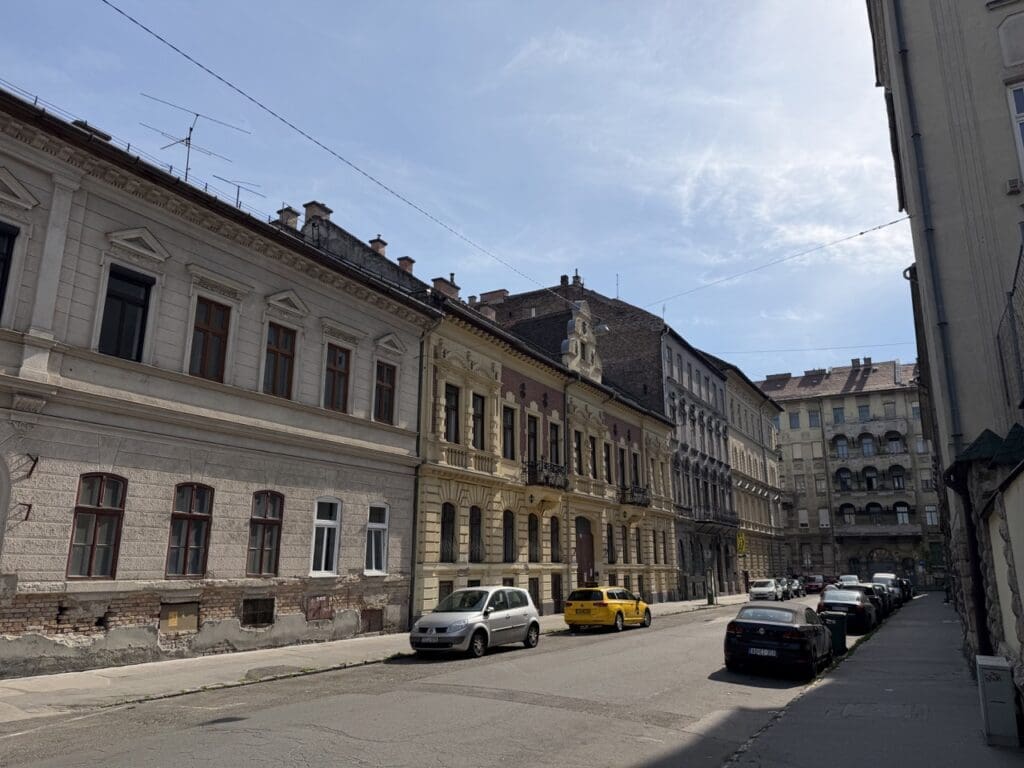
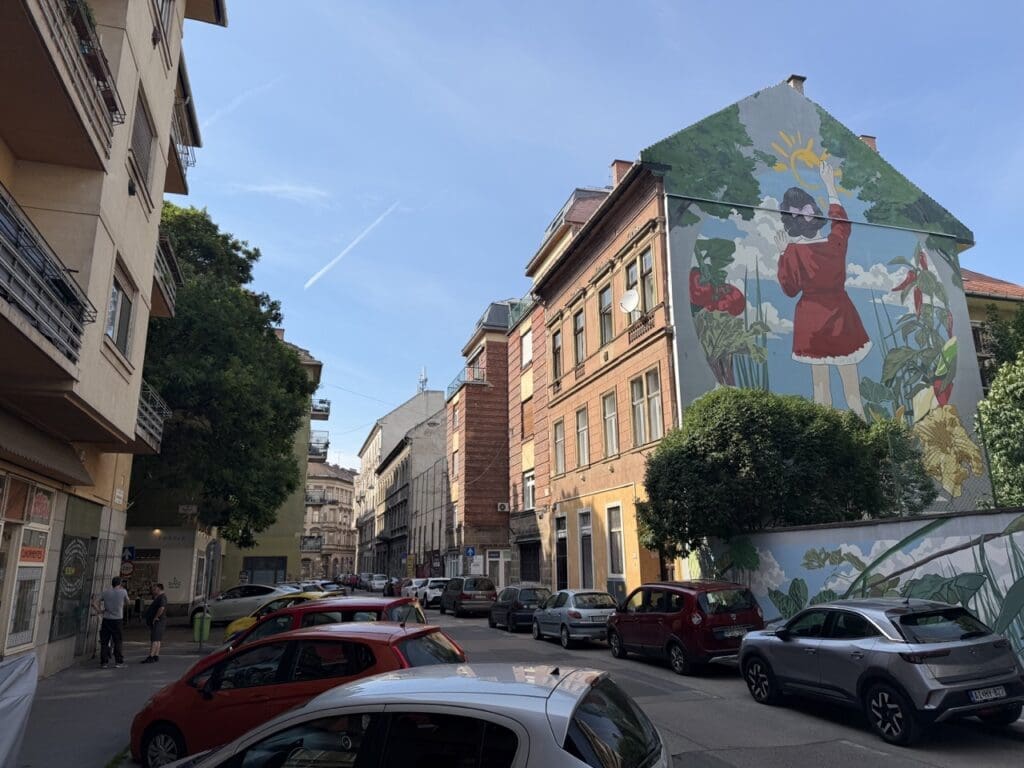
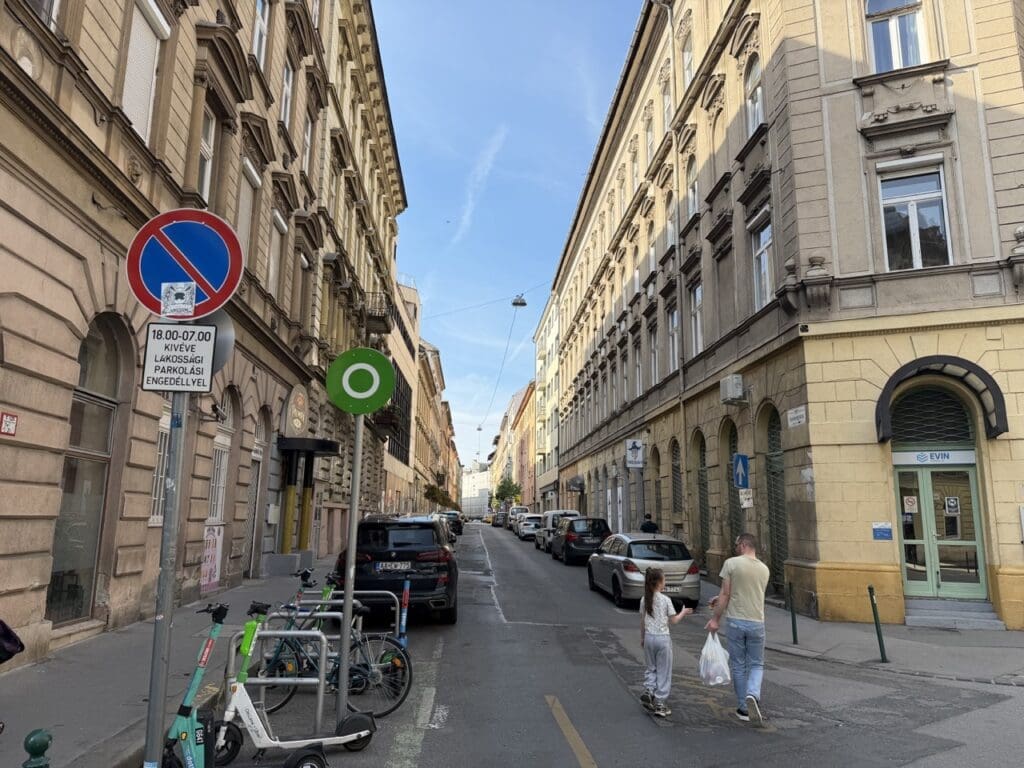
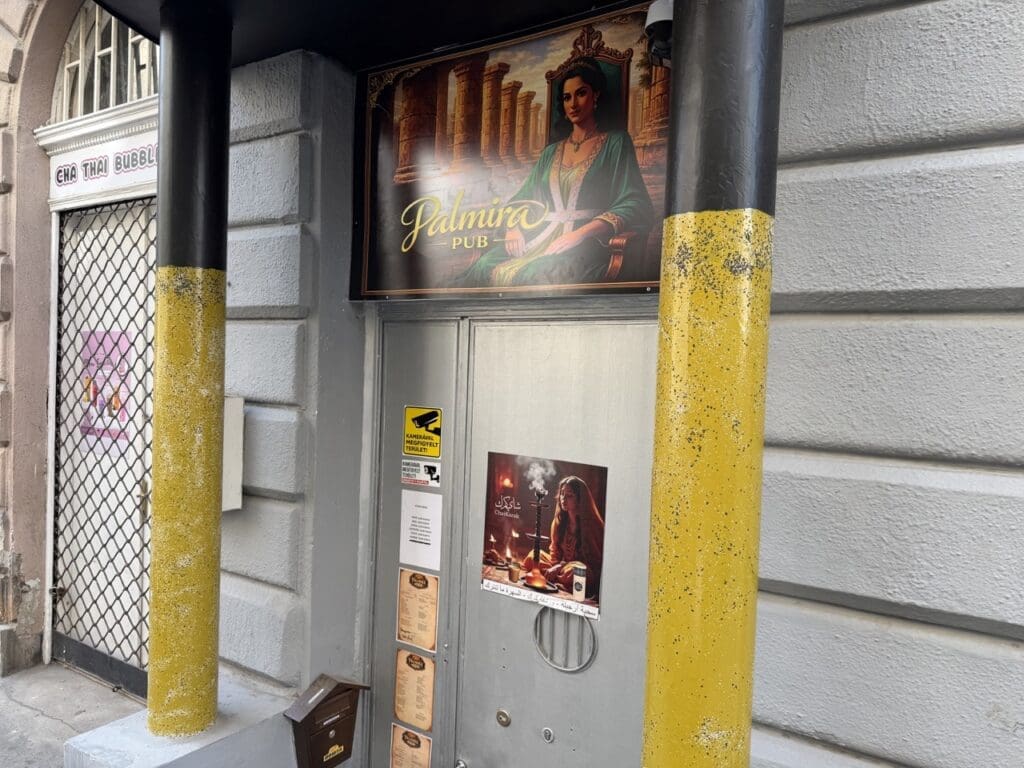
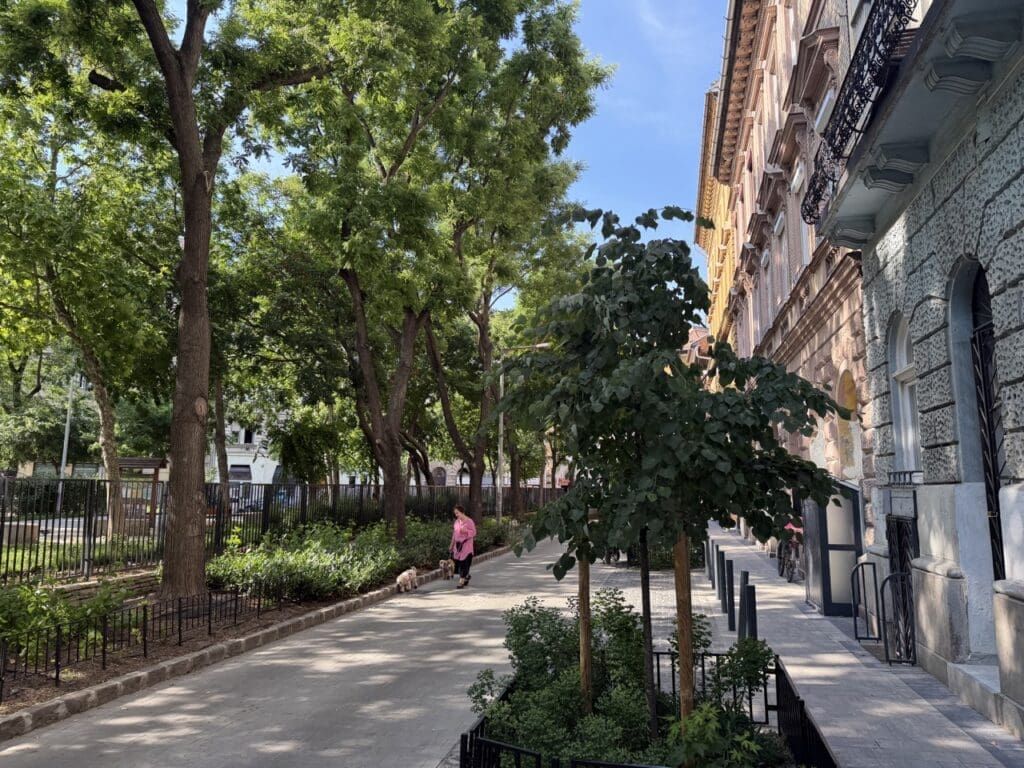
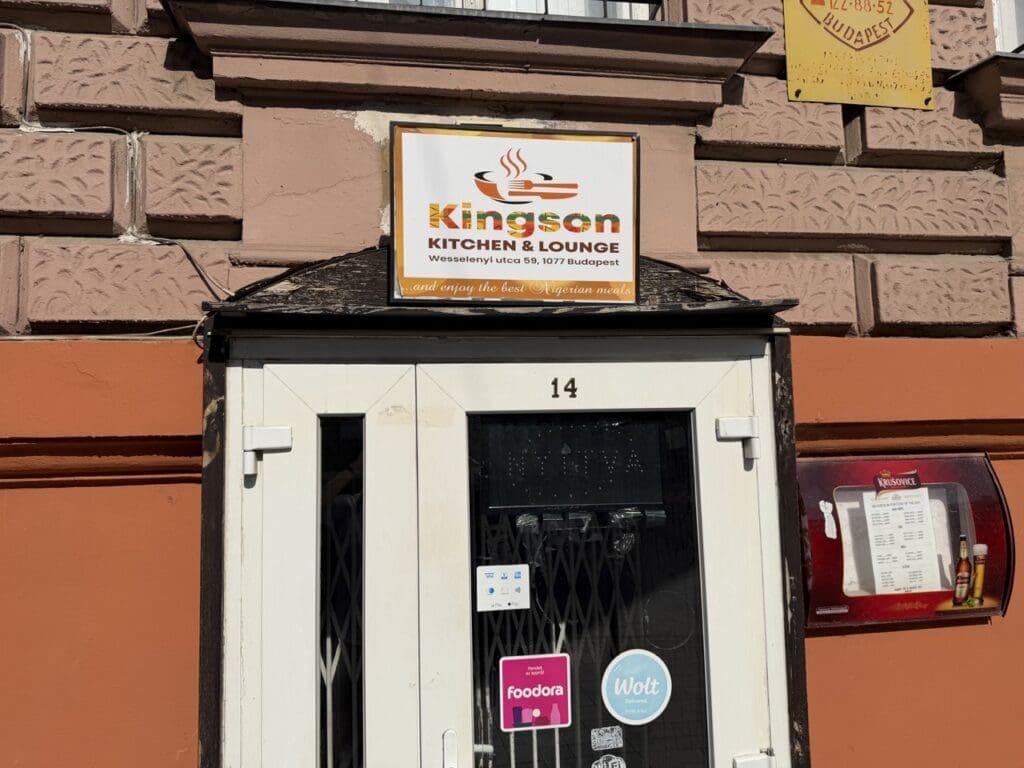
This is an area where also a lot of South Asian, Middle Eastern and African immigrant labour lands. They typically land in the 8th district but as immigration has grown, many also settle in this part of the 7th district. But to be clear it is still much nicer than the 8th district.
Little-known but premium area of the 7th district
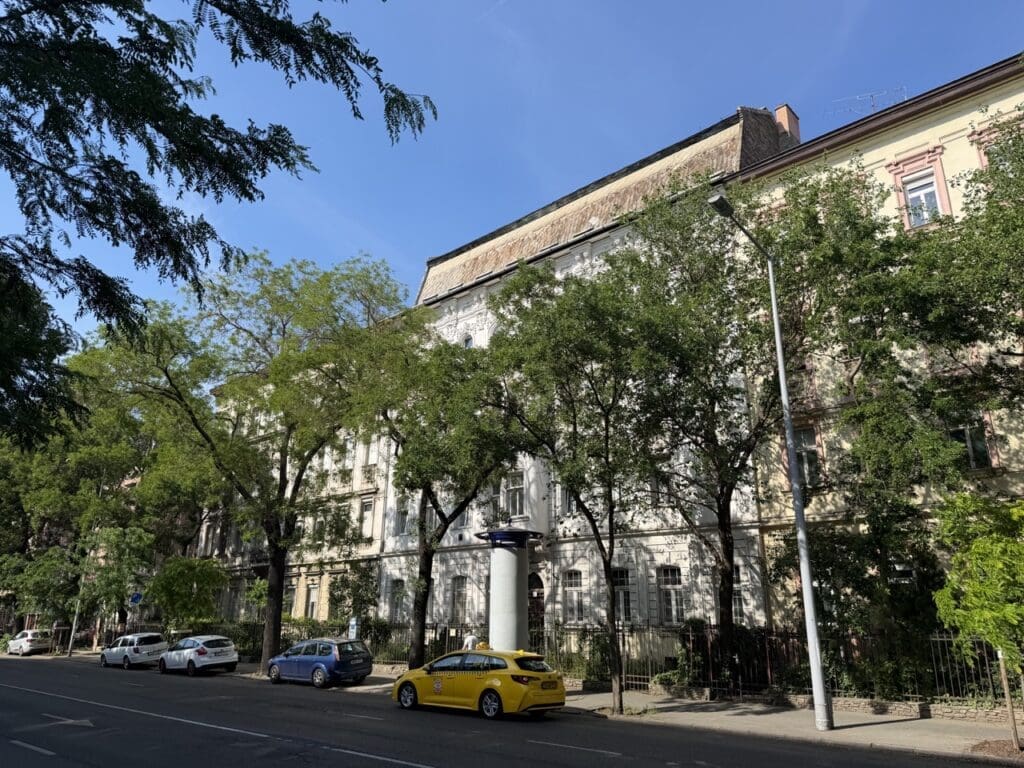
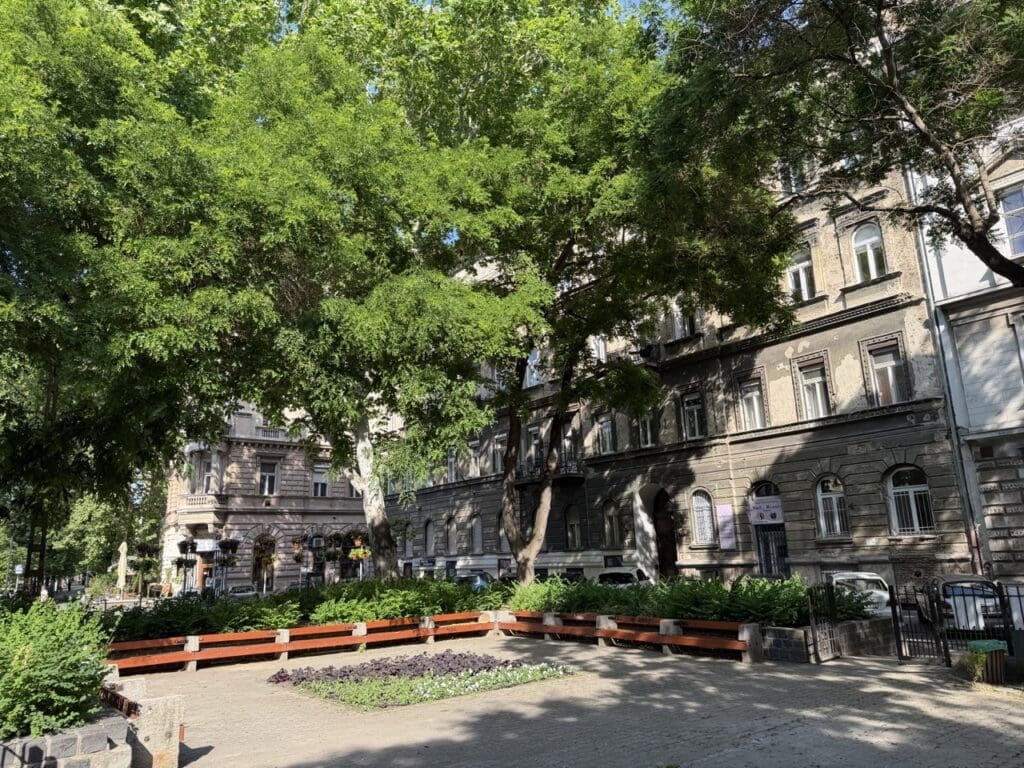
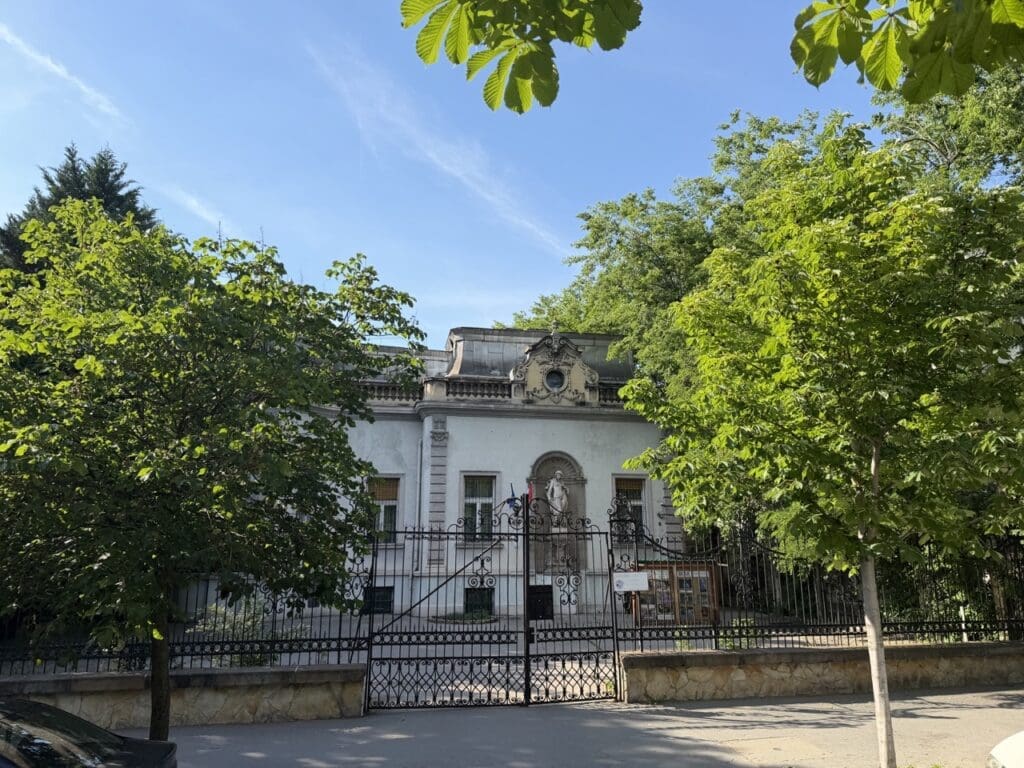
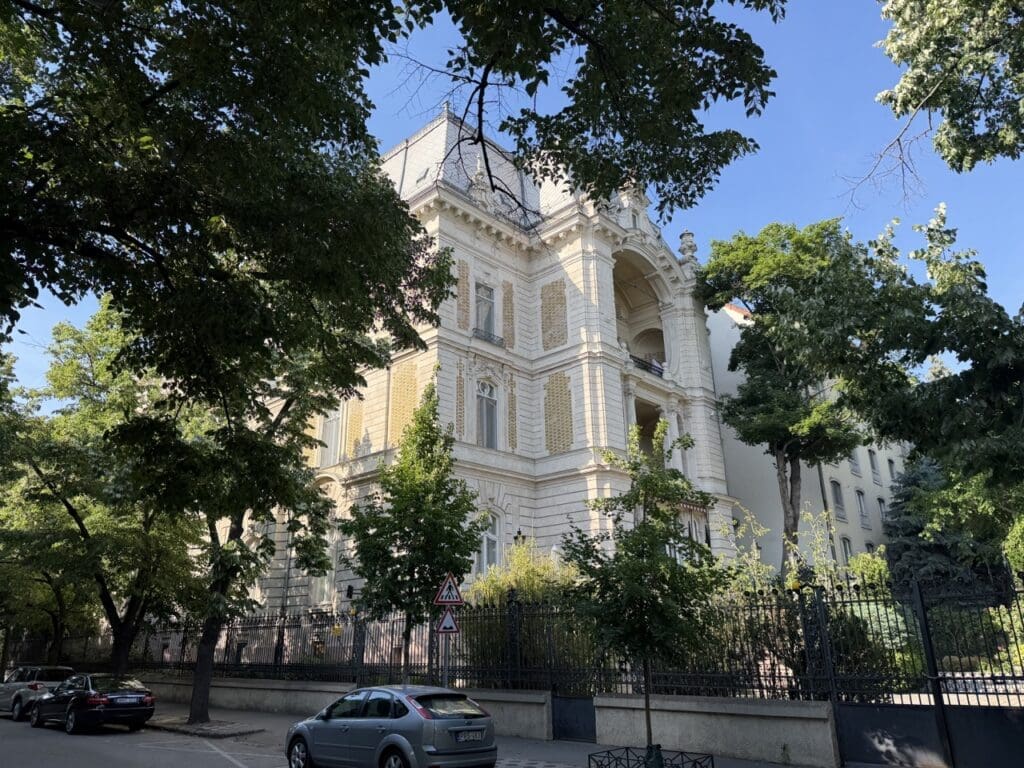
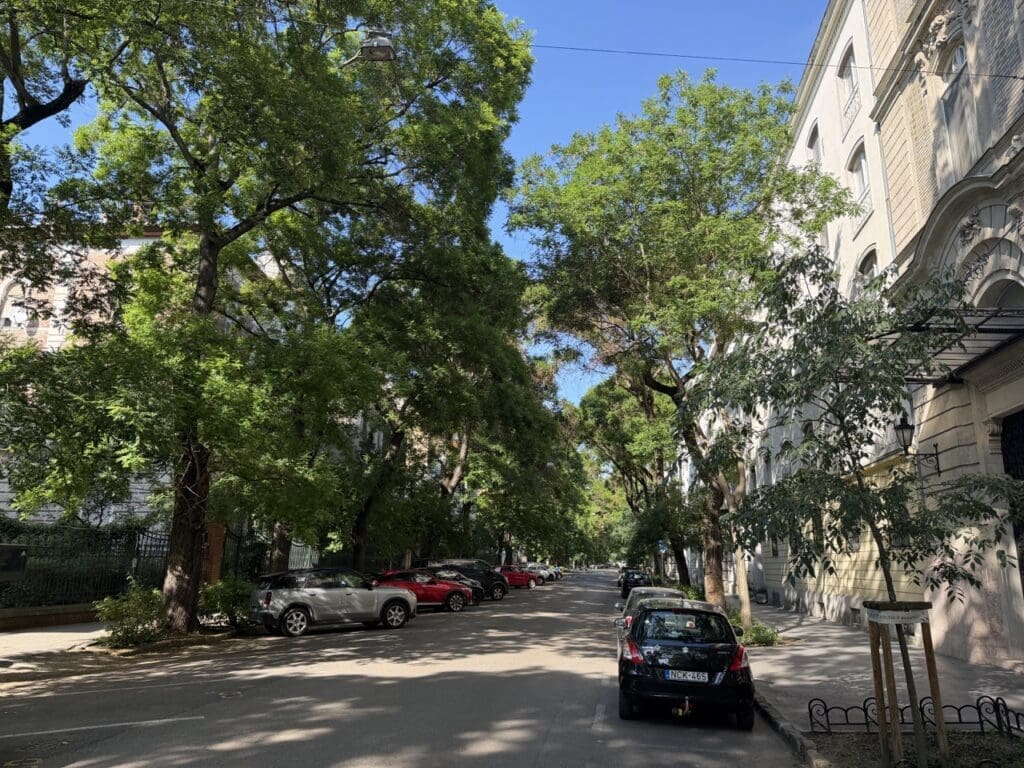
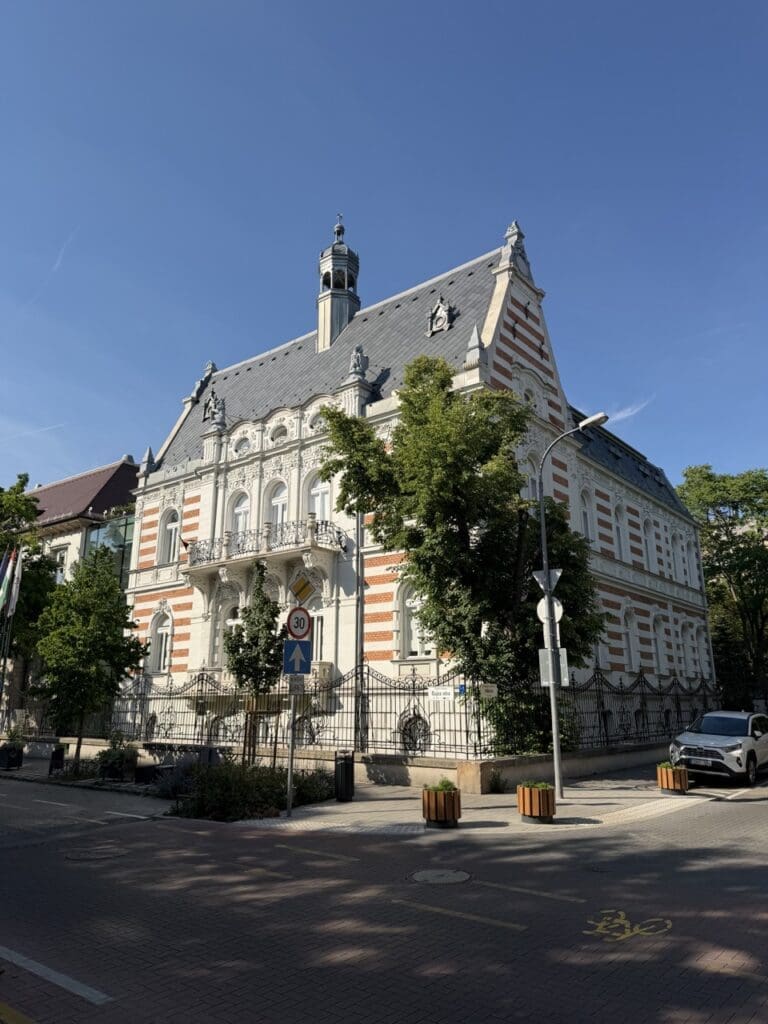
Great value for money is to be found here on the back of the urbanization works done at the massive City Park. This area houses embassies and gorgeous historical buildings but was left for dead. People are now starting to realize its inherent value.
Real Estate in the 6th district
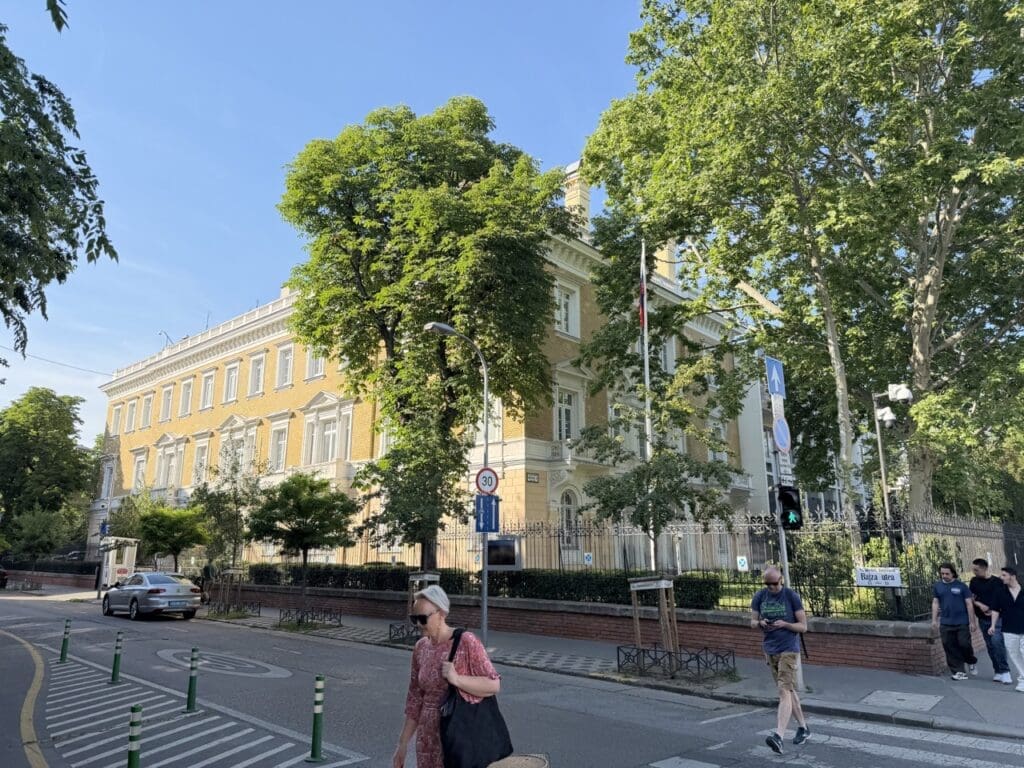
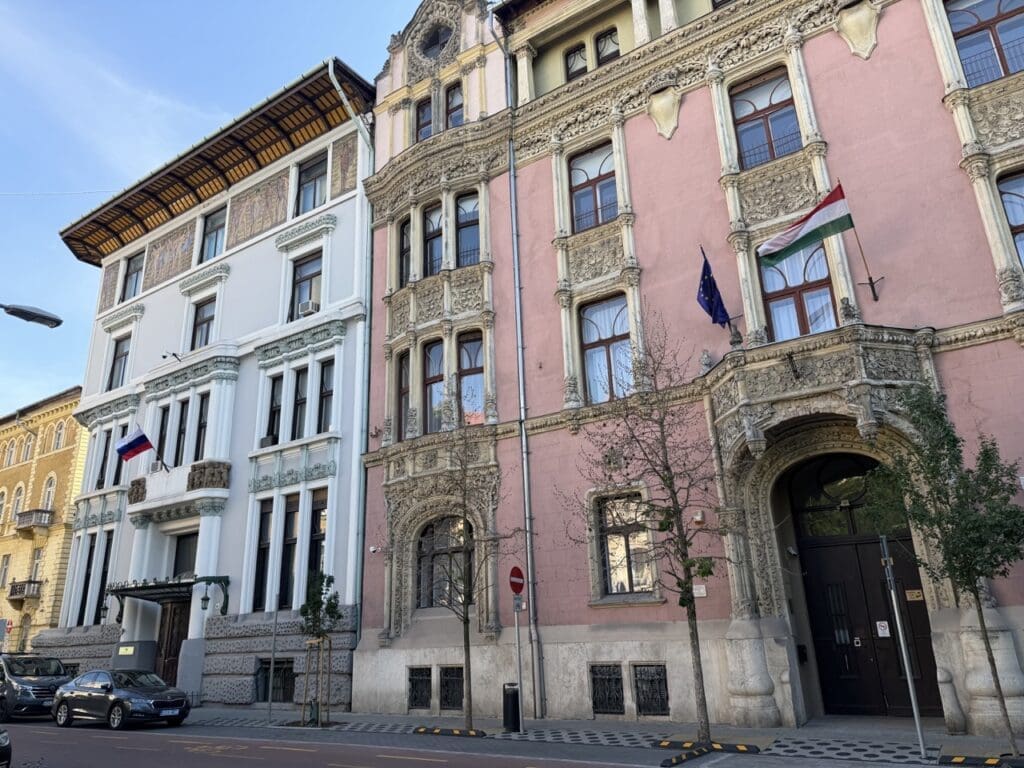
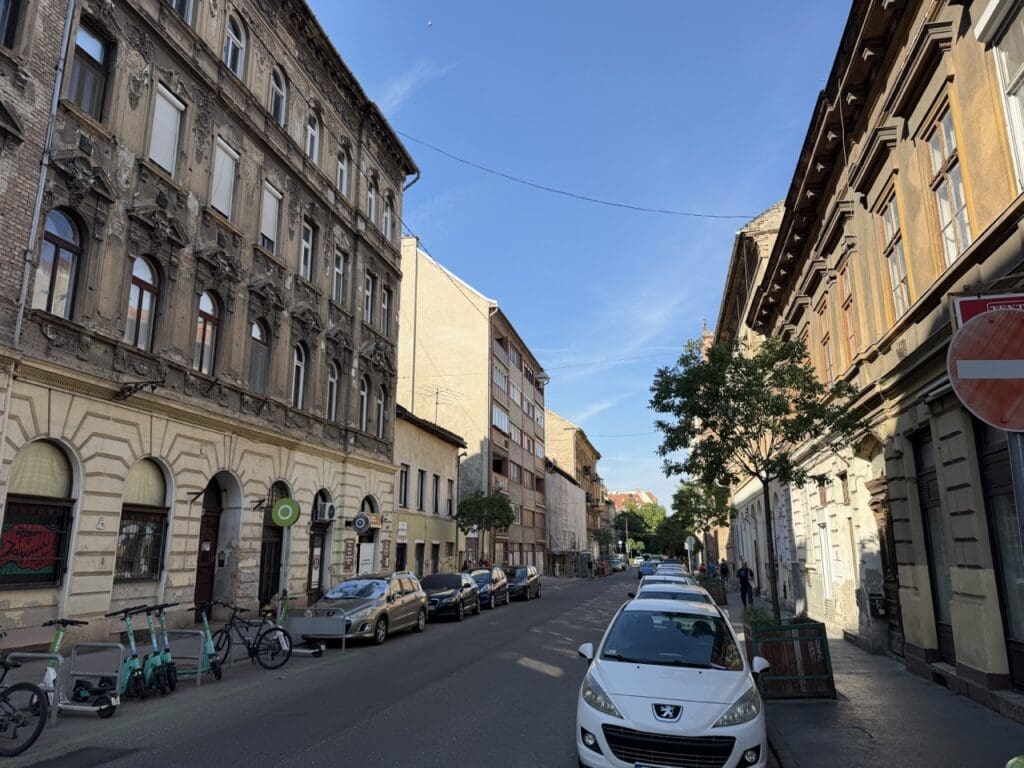
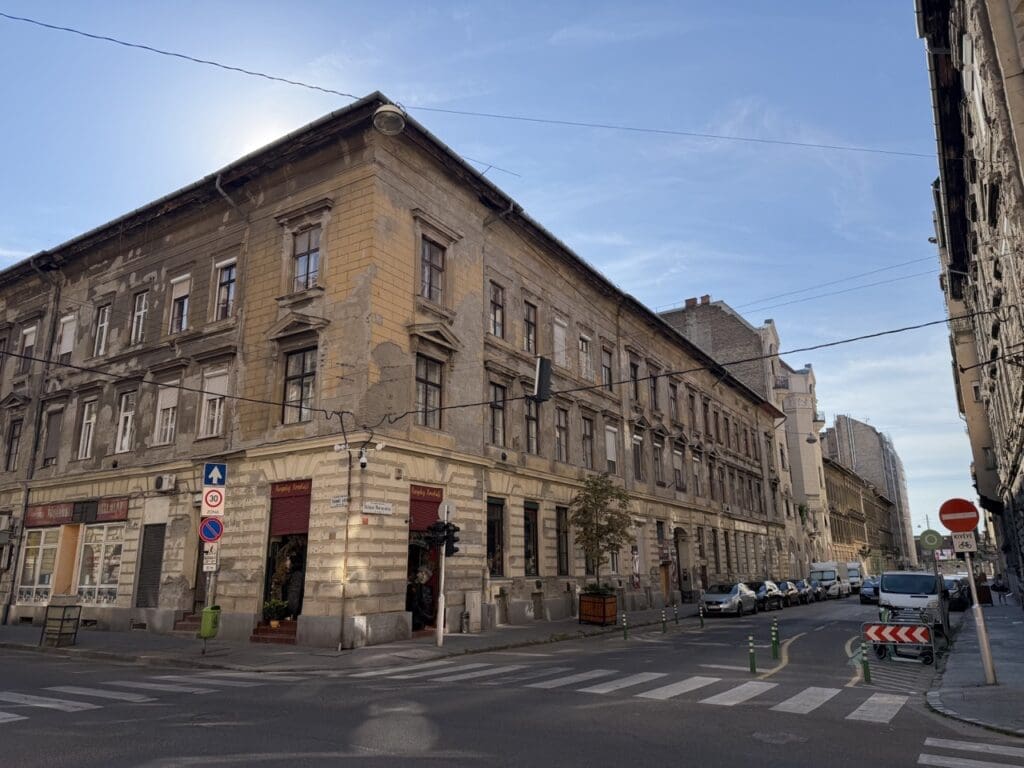
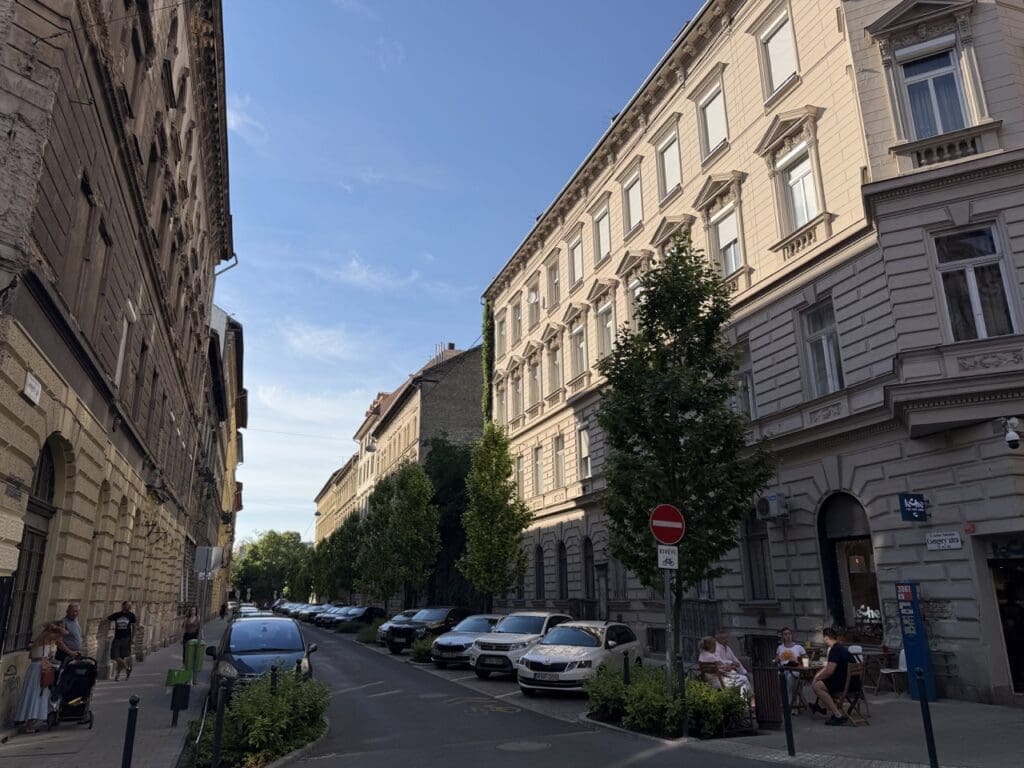
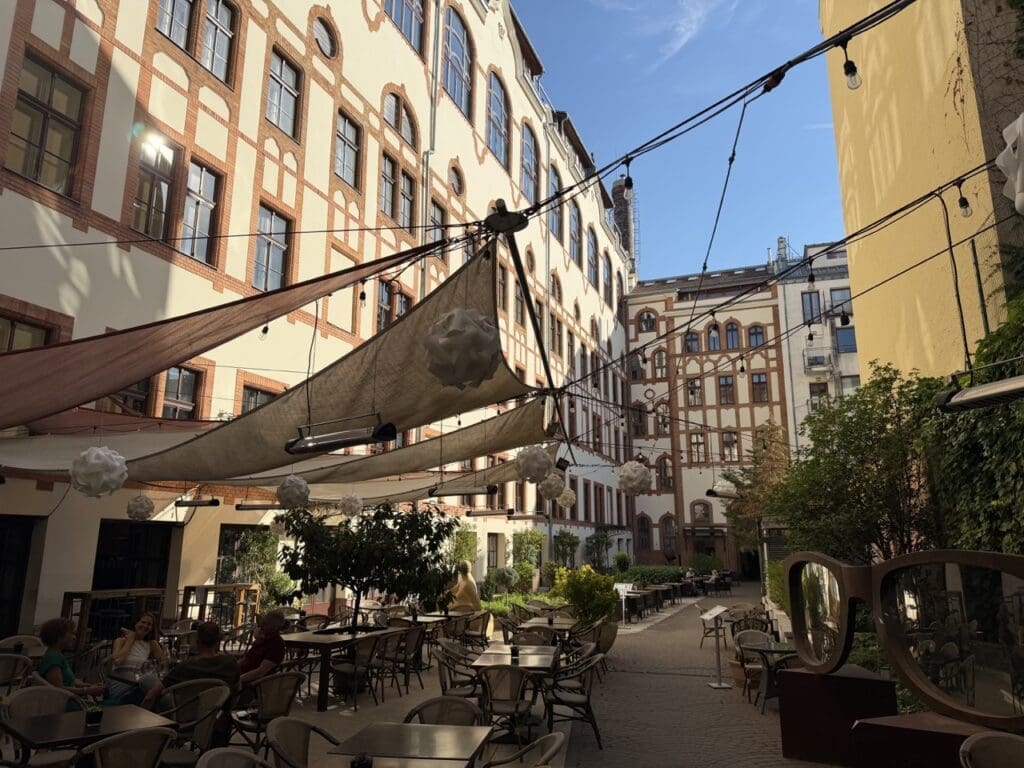
Very investable. Nice district. Whether within the Korut (ring road) or outside the Korut all areas of the 6th are fine. Prices vary between the micro districts, so be careful not to overpay. The 6th district is central, pleasant, residential and appreciated by people. The only downside is a lack of green areas.
Real estate in the 13th district
This is an area beloved by Hungarians, but I fail to see much value here. It’s a huge district. On the one hand there is this large nondescript part which is not even worth discussing
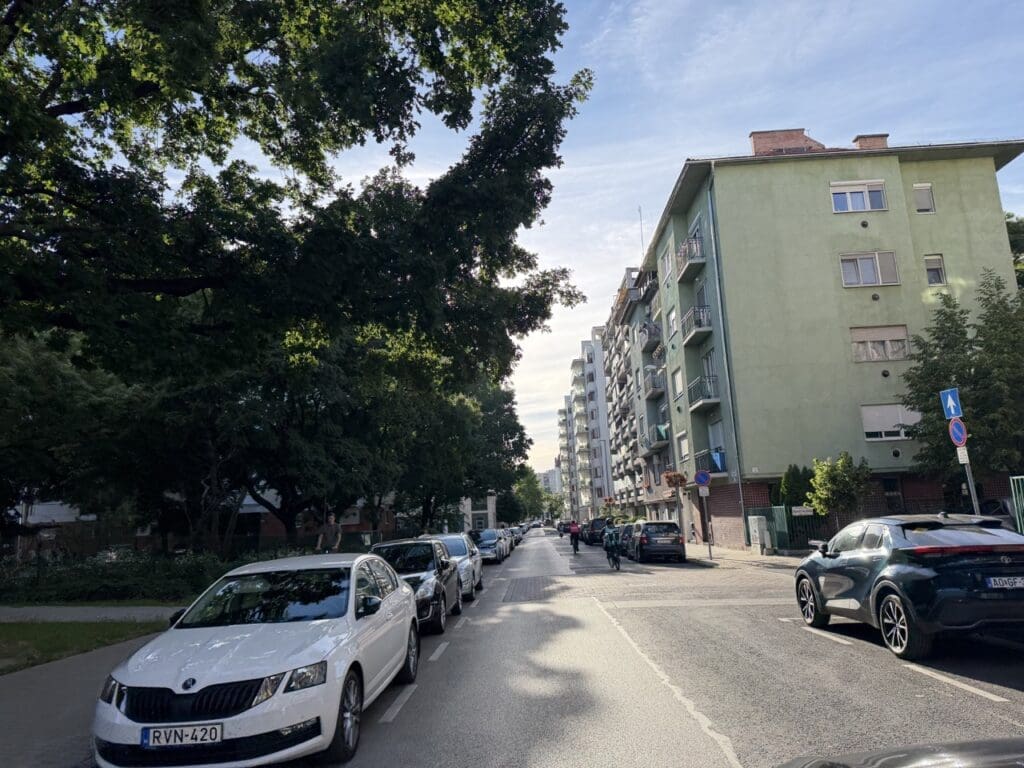
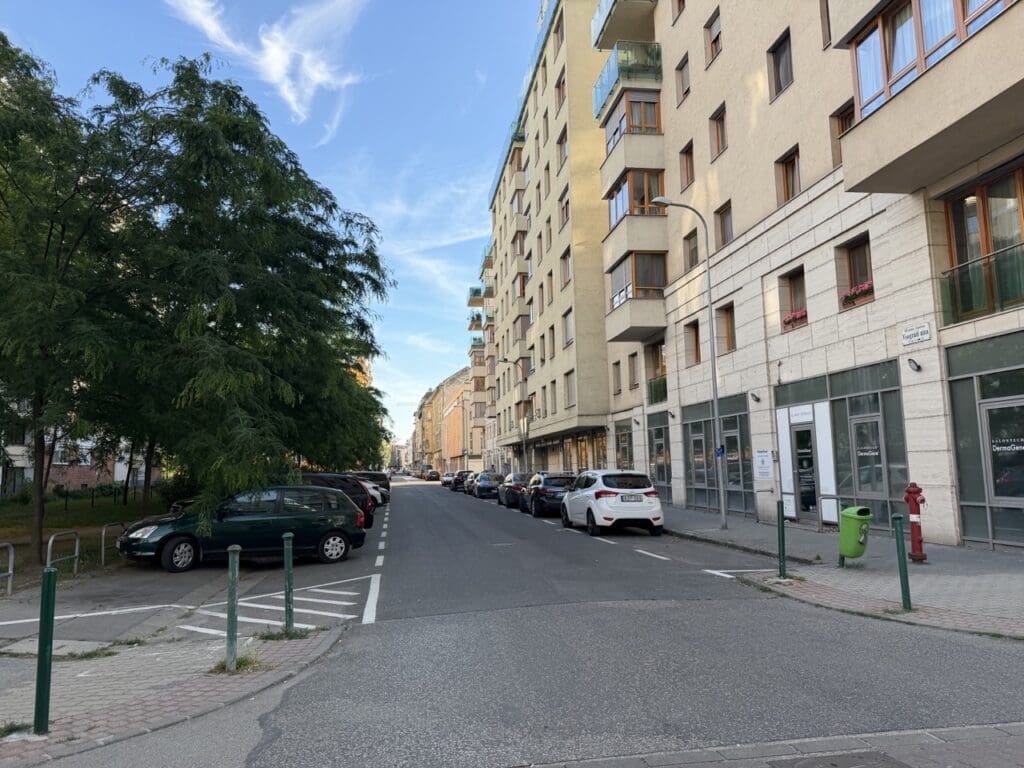
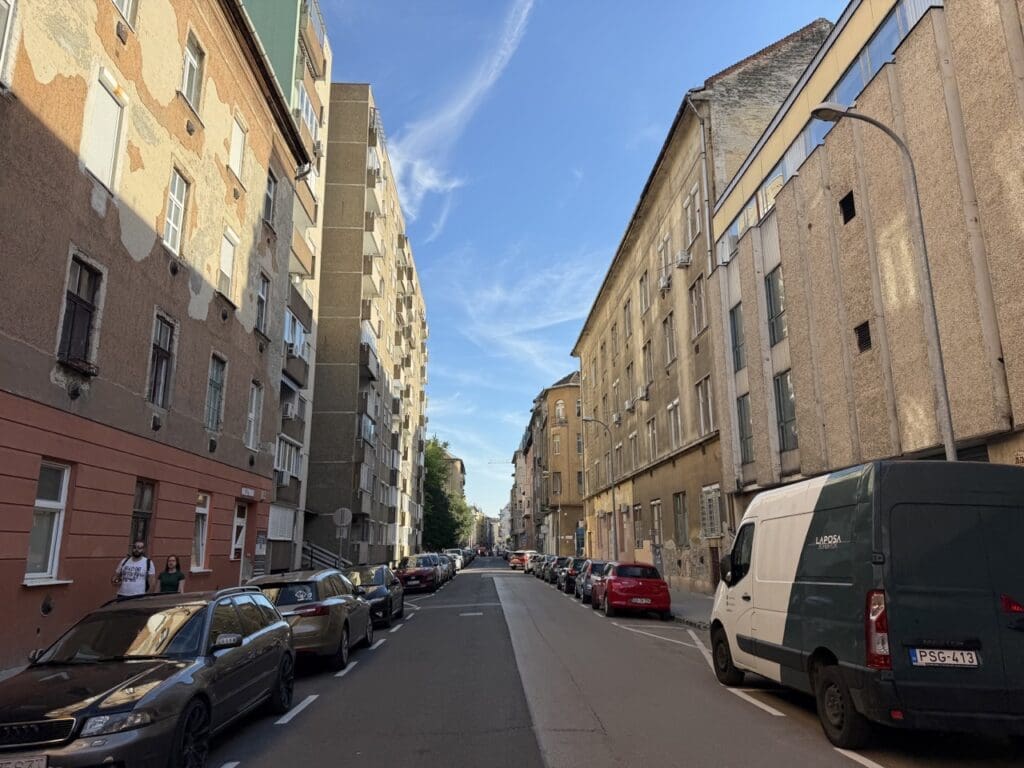
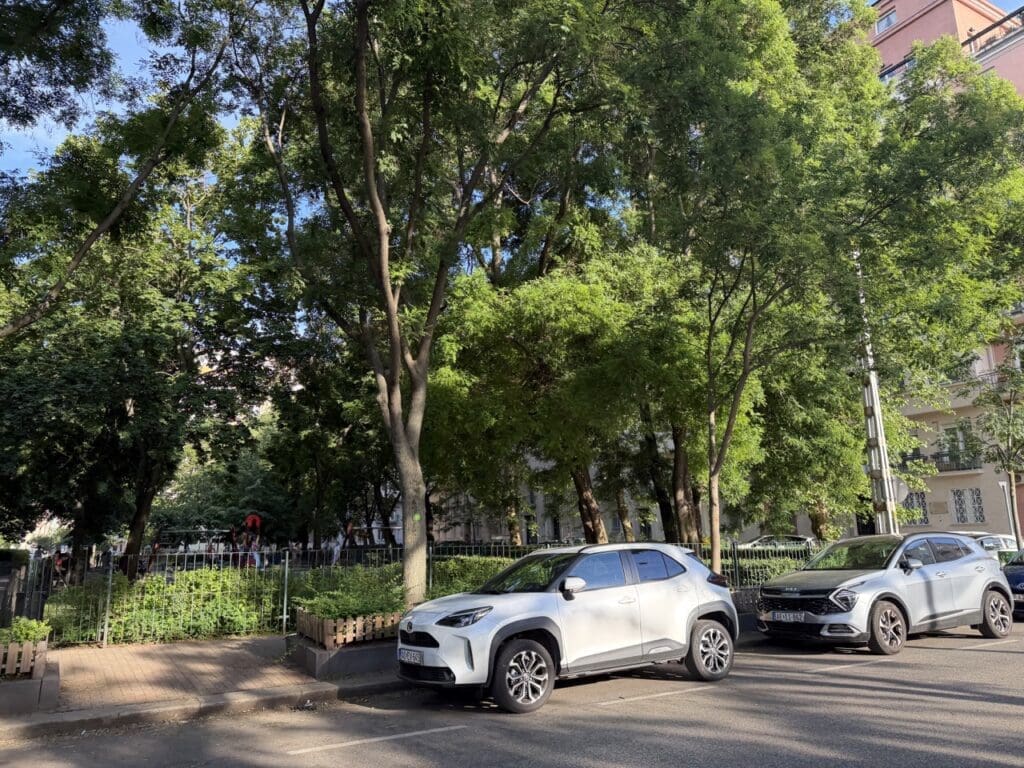
On the other hand the area close to the 5th district and close to the Danube is charming. There are cute cafes, restaurants and parks. However the price gap with the 5th district is too small I feel. I’d rather pay a little bit more to be across the Korut (ring road) in the 5th district.
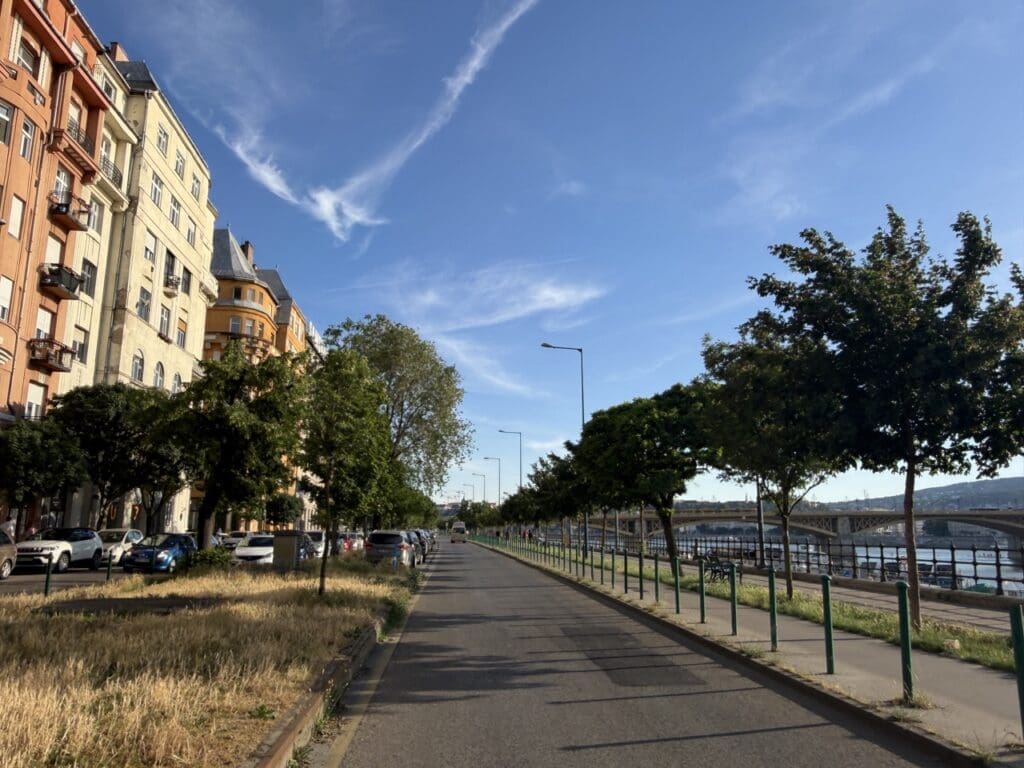
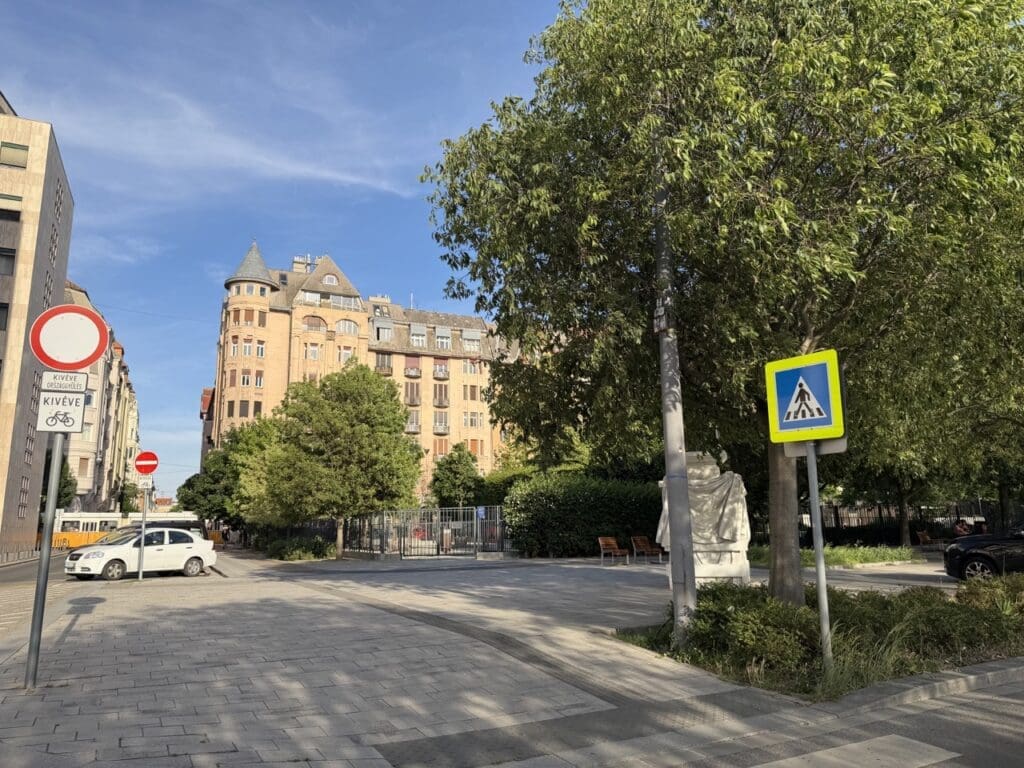
Video: Benedek’s Favourite Areas to Invest in Real Estate
Case Study: Real Estate Investment in Budapest
This apartment is located on Paulay Ede utca in the Jewish quarter, close to the Opera, and one street behind Andrassy ut, the Champs-Elysees of Budapest. It is a 74m2 two-bedroom apartment on the first floor (not the ground floor) of a gorgeous historical building. It’s a triple-A location. I owned this apartment for a few years and sold it three years ago to increase my allocation to Latin America.


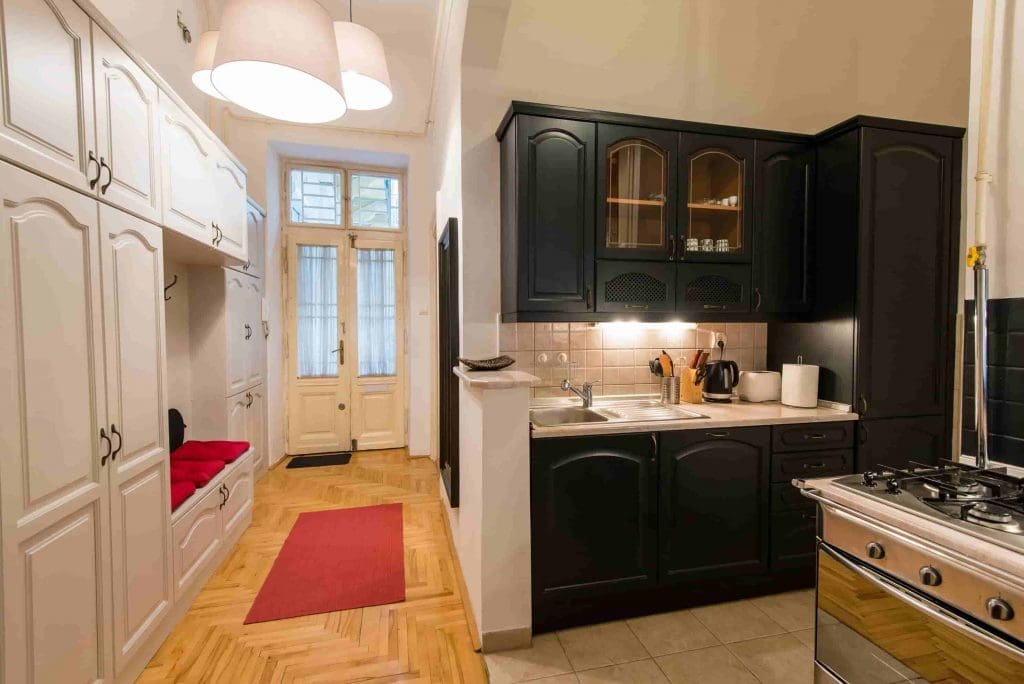
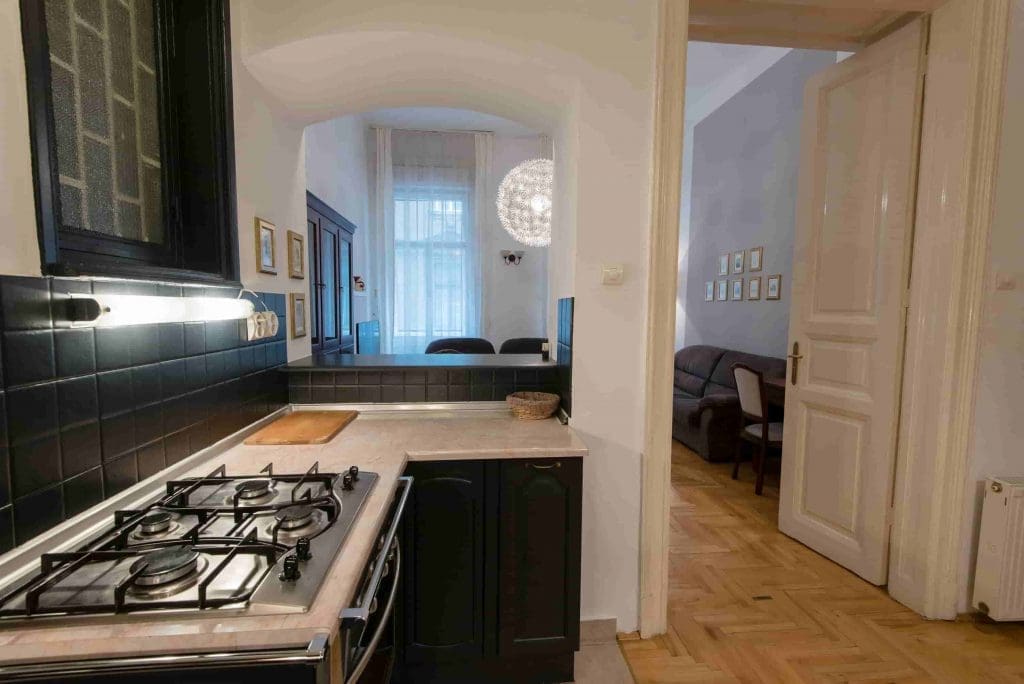


This apartment would be currently valued at ~ €280,000.
The market value of the rent is €1100 per month + utilities and standard charges. Tenants pay the common charges of HUF 30,500 per month, which include water. They also pay for gas, internet, and electricity. The owner is liable for a yearly property tax of HUF 144,000 (~€354).
Here’s the breakdown of the yield calculation.
| Price of apartment | €280,000 |
| Price of apartment with closing costs (4% stamp duty +1.2% legal fees) | €294,560 |
| Rent of €1100 x 12 | €13,200 |
| Gross yield INCLUDING buying costs (4% stamp duty +1.2% legal fees) | 4.5% |
| Yearly rent at 95% occupancy | €12,540 |
| Management + tenant finders fees 15% | €1,881 |
| Maintenance 5% | €627 |
| Property tax | €354 |
| Net income before income tax | €9,678 |
| Net yield | 3.3% |
A net yield of 3.3% for historical, core property in a European capital city is actually a decent yield these days. If you were to invest in a similar apartment in a district that allows Airbnb, you could expect a net yield of about 5%.
Investing in the Hidden Gems of Budapest
Foreigners typically invest in the core Pest districts, but many other districts in Budapest are very investable, offer a lovely Hungarian lifestyle, and barely have any foreign investment for now.
Legal and Tax considerations when making a real estate investment in Budapest
It’s essential to use a good lawyer in Hungary. There can be quite a few issues with buildings, such as debt and failed rooftop projects. Also, an apartment can have a number of claims and liens against it.
The purchase contract is typically signed at a lawyer’s office, and preferably, the contract should be bilingual in English/Hungarian so that you are not only not clueless, but you have the proper paperwork to present to your bank back home to make the transfer. The first step is typically to deposit 10% in an escrow account following the signature of a pre-contract and a few weeks later to wire the final 90% once the lawyers have cleared the paperwork.
Be sure to negotiate 4-5 weeks in between payments, as sometimes your bank can cause you problems. There are many instances of banks’ compliance departments delaying the transfer, thus resulting in the 90% arriving late. Some Hungarian sellers then keep the 10% for themselves because they can (you were late contractually).
I’ve done a number of successful real estate transactions in Budapest. Feel free to get in touch with my real estate lawyer in Budapest. He is fluent in English, and has a flawless reputation in the industry. He specializes in commercial and residential real estate transactions in Hungary.
More details on the purchasing process and purchase related taxes in Hungary.
As for ongoing taxes, once you own your real estate investment in Budapest, Hungary, you’ll have to pay property taxes IF you rent the apartment out. If you live there or if the property remains empty, there is no property tax to be paid. To receive your property tax bill, you must go register the property at the local district office.
The tax rate on rental income is a flat 15%, and almost all expenses can be deducted (even your trips to Hungary!). There is also a capital gains tax of 15%, which decreases by the year. After year five, no capital gains taxes are due.
Whether you want to buy property or not, go to Budapest!

Budapest has been one of my part-time bases in Europe for a few years now. I absolutely love it. It’s a stunning city, the beer and wine are plentiful, the weather is surprisingly good, its history is rich, and there are amazing bicycle trips to be done along the Danube and around Lake Balaton. So, If you are asking yourself if real estate investment in Budapest is a good idea, I highly recommend it.
Meet my trusted realtor in the Budapest real estate market
It’s easy to overpay for Budapest real estate if you don’t understand all the subtleties of the market. 99.5% of agents in Hungary just sell what is on their books, so they are inherently biased.
Benedek operates a unique business model. He searches across the whole Budapest real estate market for the best deals, acting as a buyer’s agent representing the best interests of his client real estate investors. He offers property management services and renovation services as well.

I’m one of those people who bought a small “pad” in Budapest over a year ago. For me, this tiny apartment serves as a way to diversify my investments compared to other properties in South America, and I’m still keeping an eye on how the market in Hungary is developing. I feel very well taken care of by Benedek and greatly appreciate his professional advice. He is also an extremely friendly person, and our collaboration has gone very smoothly. -@PStua
You can also invest along the Danube
Hungary is not just Budapest, and by just heading 40 minutes out of town once can find a very peaceful and quaint lifestyle along the Danube river in small historical towns.
Frequently Asked Questions
Is it a good time to buy a property in Hungary in 2026?
The fundamentals are good so property values in Budapest should maintain their value and gradually increase over time, especially due to very limited current supply and upcoming supply.
How is the real estate market in Budapest?
The real estate market in Budapest is heavily divided between the core center of the city, where many foreigners invest, and the other districts which are largely driven by local demand. Budapest real estate has historically been quite volatile.
Is Budapest a good place to invest in property?
Budapest is one of the most affordable capital cities in the European Union, yet it is a major city in central Europe with gorgeous architecture, a great airport, and a booming tourism industry. Budapest real estate offers great value for money.
Is Budapest affordable to live in?
Budapest is one of the most affordable capital cities in the European Union. It is also one of the most affordable EU capital cities to eat out and drink though prices have increased a lot over the past few years.
Can I get a mortgage in Hungary as a foreigner?
Generally speaking, no. It’s extremely complicated, even for foreigners that have temporary residency in Hungary.
Services in Hungary:
- A Real Estate Lawyer in Budapest, Hungary
- My favourite buyer’s agent in Budapest, Hungary
- Golden Visa in Hungary through real estate investment
Articles on Hungary:
- Budapest, Hungary Real Estate Market: 2026 Investor Guide for good value for money in Central Europe
- A cheap Plan B in rural Hungary
- Investing in the Stock Market in HUNGARY, good value or value trap?
- Best neighbourhoods and districts to buy Real Estate in Budapest
- Buying historic property in Budapest – full rental yield and ROI calculation
- Hungary Golden Visa – Timeline and Cost vs. other Schengen Residency Programs
- The Lesser-Known Neighborhoods of Budapest for Lifestyle and Investment Real Estate
If you want to read more such articles on other real estate markets in the world, go to the bottom of my International Real Estate Services page.
Subscribe to the PRIVATE LIST below to not miss out on future investment posts, and follow me on Instagram, X, LinkedIn, Telegram, Youtube, Facebook, and Rumble.
My favourite brokerage to invest in international stocks is IB. To find out more about this low-fee option with access to plenty of markets, click here.
If you want to discuss your internationalization and diversification plans, book a consulting session or send me an email.

Super informative post, thank you!
Are you planning to review Riga, Latvia as well in future?
Thank you Anzelika. I will next time I go there :). Subscribe to the free private list to not miss out future such articles.
nice and balanced article
but 1.2% for a lawyer? paid not even half of that on my last purchase.
Thank you. Yes, I use an expensive lawyer. I always go for the best when operating abroad.
I have rarely seen so many lies in a single article …
Thank you for the constructive feedback Andras.
Thank you for this insight, which is as fair and balanced as ever.
There seems to be 5% missing in the amount of Income tax of 15% on rental income, whence 0,02% in excess on the bottom yield – but that’s just to show how close I read your analysis, Ladislas 🙂
Thank you Bertrand. You have a point – I need to make these numbers a bit clearer next time around. Cheers 🙂
Good in-depth article, thank you.
I do think though that the way you look at the relation between the EU and Hungary is way off, or biased in some way. There is no such thing as ‘free money’, thus the EU is obviously not giving alms to Hungary. They have their own agenda. You not seeing this puts a shadow on the rest of the information in the article for me.
This is good insight. Living here for 15 years and this is spot on. If anyone tells you otherwise, there’s an agenda behind.
My only caveat is the ‘ you can deduct almost every expense out of the rental income’. It might have been so in the past, but nowadays we can barely get cleaning expenses without NAV coming with questions.
Thank you Andre.
Hello Ladislas,
I just stumbled across your website. Thank you so much for this very informative article – it’s clear, lucid and contains clear information without jargon or any ‘spin’. I’ll definitely be back to read much more on this site!
All the best for 2021!
Thank you for a great article. Extremely helpful and insightful. Thank you for the hard work.
Thank you Dilippo 🙂
Thank you for the article. Did your friend already sell the property mentioned in the article?
Thank you Tibor. He hasn’t. Send me an email if you’re interested.
I appreciate your candid article Very informative to a 1956 refugee who is interested in acquiring property in his former homeland. One question sir, does the IRS penalize a puchase in Hungary or anywhere for that matter?
Hello Sandor. Thank you. You’ll have to report any income deriving from your Hungarian assets to the IRS. But kindly speak to your CPA for all the details as I am not accredited to speak about US taxes.
Thanks for the quick response. This is a little depressing. If one dies ? How does the property transfer to heirs in Hungary?
You have to read the various treaties between the US and Hungary for both taxes and estate matters.
Hello, I am a property lawyer and investor here in Budapest and I found your article very informative and precise, thank you. The only disturbing part is your comment about the EU-subsidies: this is not a gift, but the price Western countries agreed to pay in exchange for our opening of our markets, where Western companies made fortunes in the past decades – so it simply did not and does not cost the Western taxpayers anything. It was a contract: we open up the markets and they finance the development of our countries. We have done our part of the agreement, so it is very annoying when anyone wants to put new conditions on any payment or tries to show such as a gift.
Hello Zoltan, thank you. I completely understand your point of view. Western taxpayers paid for all the subsidies, Hungary benefited from them, and large Western corporations gained new markets.
Andreas the accountant from Bremen and Luuk the construction worker from Rotterdam didn’t get much in return for the taxes they paid. They are left holding the bag.
Hello, not really. Western companies repatriated their profits as dividends which were taxed in their home countries, so the governments there could afford more spending so the small guy there had better healthcare, etc There were times when Deutsche Telekom charged 5 times more for mobile phone sevices in Hungary than in Germany, i.e. profits in Eastern-Europe enabled the companies to sell their services in their home market cheaper, thus benefiting their local
small guys. Before the 2008 crises, the Austrian bank Raiffeisen made 80-90 % of their operating profits in Eastern-Europe, thus enabling them to offer free banking to their Austrian clients, so yes, all the Western taxpayers benefited and still benefit from subsidies to this region (I hope you don’t believe that Western countries are doing this for any motivation other than pure self-interest…). Anyway, back to your article: Q1 2021 shows an increase in housing prices, as in most parts of the OECD
@Zoltan Vincze:
Your interpretation or equation of Hungary joining the EU (=we open our economy and in return the EU needs to fund our infrastructure etc) is lacking a few very important parameters and historical facts. Not only were the Hungarian markets opened to Western companies but likewise were all the EU economies opened to Hungary (free movement of goods, services, workers etc). Certainly, in the early 2000s the Hungarian economy was not that competitive to make substantial use of that access. However, especially the free movement of workers helped a lot of Hungarian employees and their families.
Secondly, big western companies like Deutsche Telekom or Eerste Bank Austria started their investments long before the joining of the EU by Hungary in 2004. Many of these companies were present in Hungary from the mid-90s onward or even earlier (e.g. , Audi: 1993). Also, it is a bid short-sided to argue that only these Western companies benefited from their involvement in Hungary: A worker in a car factory in Györ or Kecskemet even in the late 1990s found himself making 4-times more than the median local salary…
Then, the example with the Austrian bank offering free bank accounts to clients in Austria powered by the profits in Hungary. As a former banker let me clarify: It is true that Western companies charged (and some still do) more for their goods and services than in Western EU-Countries. However, this has little or nothing to do with their profits abroad. The reason for higher charges in Eastern EU-countries is obvious and simple: No or little competition in emerging markets. In the 1990s and 2000s many sectors in Eastern EU-Countries were Eldorados for Western companies. The same thing can be observed nowadays in African countries or elsewhere. As for your above banking example, the reason for the Austrian bank overcharging was just the same: lack of competition in the Hungarian banking sector. But again, these free-of-charge bank accounts in Austria had nothing to do with the bank`s performance in Hungary. In the late 2000s the EU banking sector underwent deep changes. Cost-effective online banks like ING came into the market putting a lot of pressure on long-established banks with costly physical branches …
Lastly, what I find a bit disconcerting (and probably many others too) at times is the negation of the political dimension of Hungary joining the EU. Apart from the obvious economic benefits and opportunities for both Hungary and Western Eu countries, the joining of the EU was meant to leave behind for good an era (1949-1991) that was not that favourable for many Hungarians and the country itself. One central idea was to gain long-term political and geo-strategic stability. It seems to me that Hungarian politicians and Hungarian media overlook this historical fact too easily when they criticise the EU. Do not get we wrong, I am not at at all saying the EU and its institutions are flawless, though I just wanted to express my observation with regards to the non-economic benefits of a EU-membership.
@The Wandering Investor:
Very good in-depth article yet easy to read at the same time
I love DVIII. My apartment is in a beautiful residential block. I love being away from all the tourists. I love Rakoczi Ter and the cafe’s there. I’m from Central London and don’t feel at all intimidated in the area. It’s very close to the metro and trams and 10 minutes walk into the centre. DVIII has a lot of atmosphere and character. Rakoczi Market is a great place to shop and Teleki Piac is a fabuous place to buy cheap produce and wine
I guess the difference for me is that I am not a pure investor. Budapest is a home from home
I’m glad that you enjoy living in Budapest Sara. I agree, it’s one of the most pleasant cities in Europe.
Sara, feel exactly the same “a home from home”. Bet more a fan of the quieter Buda side.
Franz, thank you for this very good response.
Apologies Zoltan, but some of your lines are just rubbish. E.g. compare German and Hungarian network (Telekom) prices and you find an amazing advantage for consumers on the Hungarian market. Price and Product wise.
Is this flat still available in this article?
No. But feel free to get in touch with Benedek. He can source god flats for you. https://thewanderinginvestor.com/services/international-real-estate-services/a-buyers-agent-in-budapest-and-renovation-manager/