

In November of 2025, my team and I joined a Sierra Leone CBI delegation organized by the Sierra Leone Citizenship by Investment program. The program invited licensed agents such as The Wandering Investor, prospective applicants, as well as those who had already been naturalized as citizens under the CBI.
While the delegation itself was only four days, our team spent an additional week in the country to film a feature-length documentary about the CBI program, as well as life on the ground in Sierra Leone and its potential as an investment destination. We filmed that week in On the Ground Diligence for the Sierra Leone Citizenship by Investment. What follows are the insights we gained on the ground.
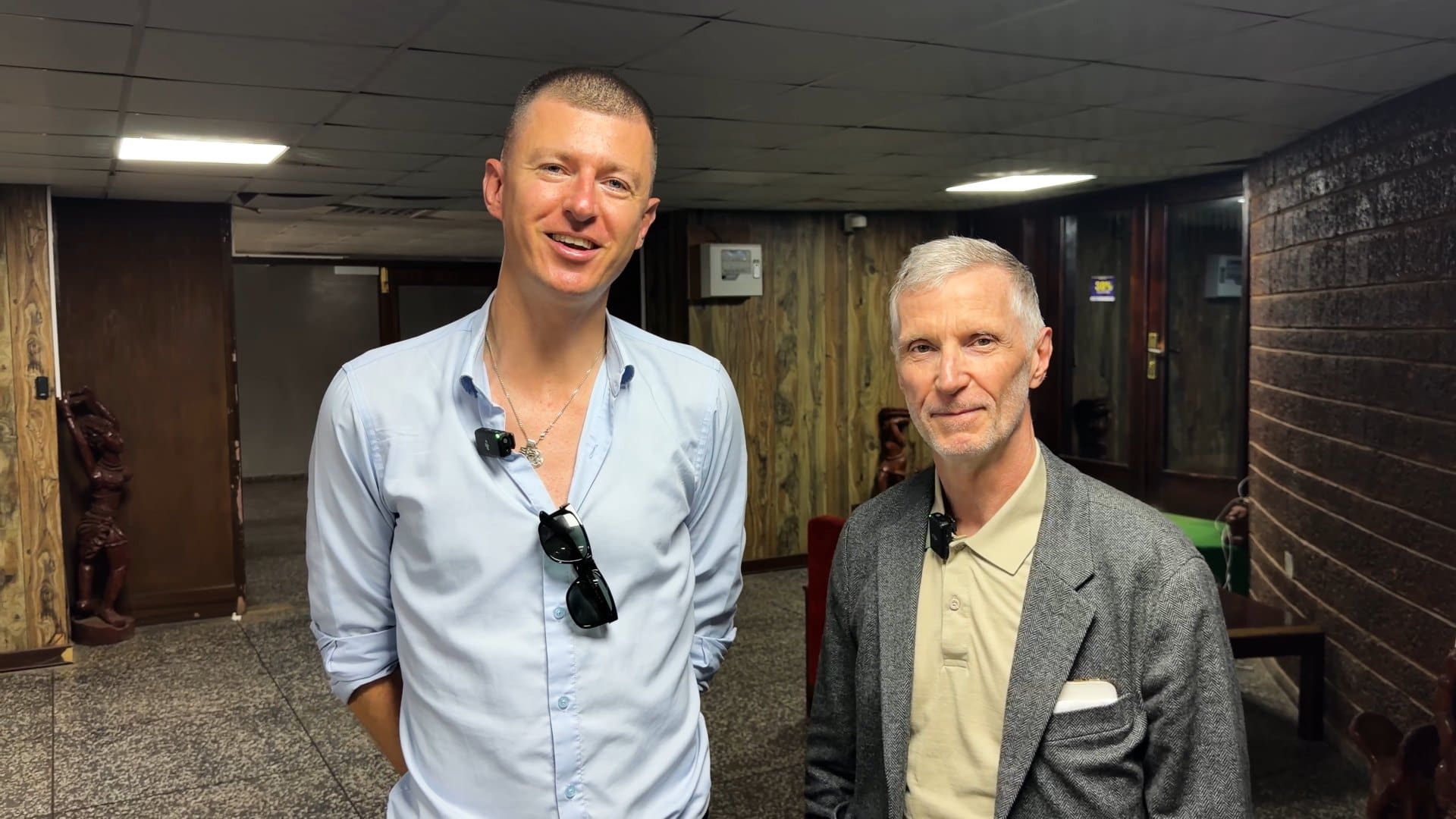
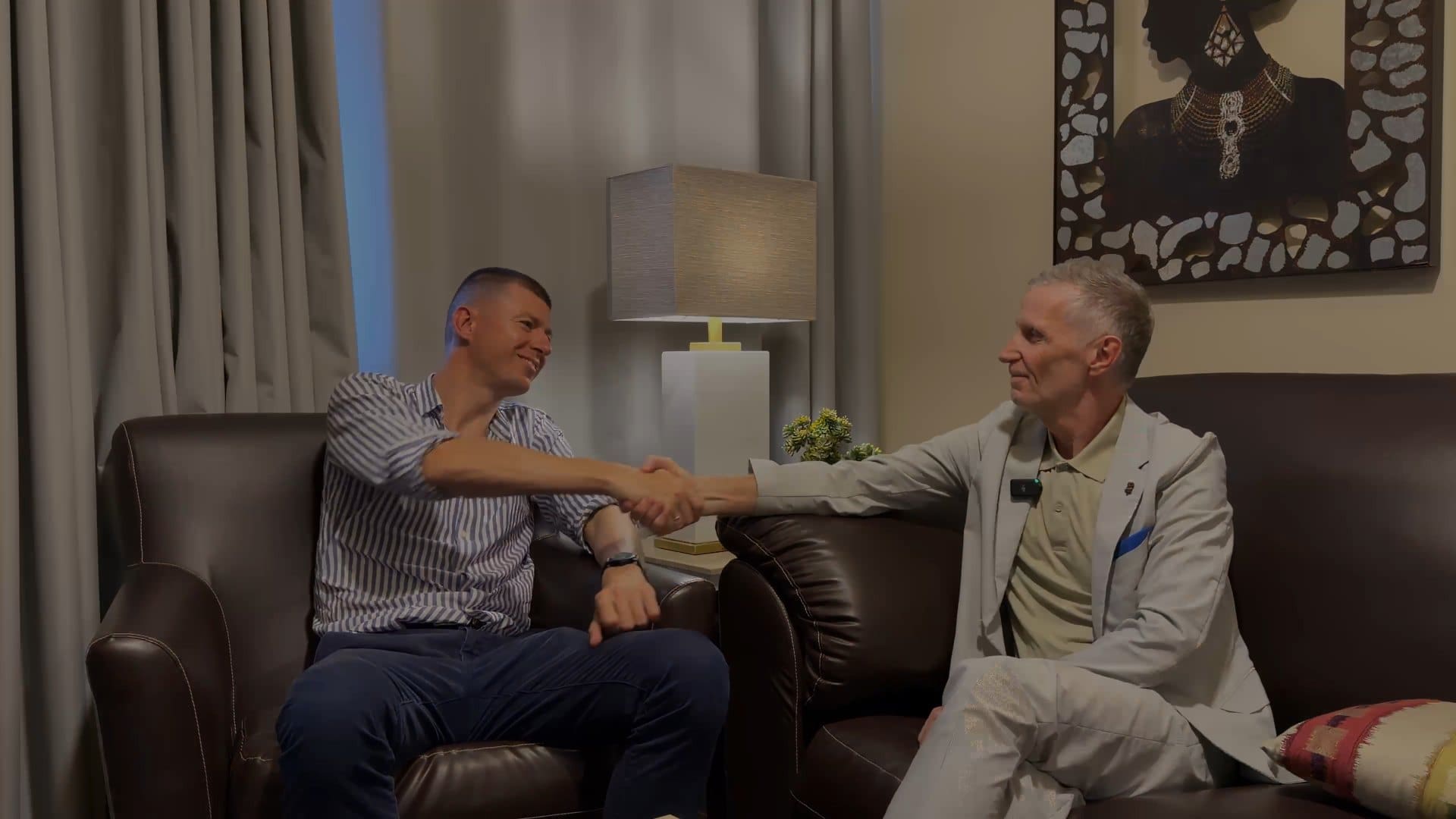
We also had the privilege of meeting two of our clients, who had come from different corners of the globe and were examining the possibility of going through the program themselves.

Table of Contents
Arriving in Sierra Leone
- The most convenient option coming from Eastern Europe was to take Turkish Airlines. There was a direct flight from Istanbul that made a pit stop in Ouagadougou, Burkina Faso, for about an hour to add fuel and drop off some passengers. Interestingly, over half of the passengers got off the plane in Ouagadougou, leaving the plane somewhat empty before arrival in Freetown.
- The airport was brand new and likely among the best in Africa, and was built only two years ago by a Turkish contractor. Many Turkish employees remain staffed at the airport to handle ground services.
- On arrival at the airport in Lungi, we were warmly greeted by the Honorable Aiah David Shek Kassegbama, a former member of Parliament.
- The downside of the airport is that it has no direct land or bridge link to the city of Freetown. We took a ferry service called Sea Coach Express to reach the city. Tickets are around $45 per person one way. The shape of the coast is such that going by land would take around 3 hours, but by boat you arrive within 40 minutes.
- There are longstanding government ambitions to construct a bridge linking the airport with the capital.


Freetown, on the ground
- Freetown climbs steep hills above the water. From above you see finished houses sitting next to concrete frames that are still waiting on the next floor. Similar to other African countries, people build their houses floor by floor, finishing one livable part completely before starting the next floor once they have saved or earned enough to do so. We saw the same thing up close later in the week.
- Downtown still has quite a few substantial colonial-era buildings, on ordinary working streets, with newer towers behind them.
- We walked a city beach. Families were out, the sand is wide, and it felt like a local beach that people actually use, rather than something set up for tourists.
- Getting around day to day is mostly by kekeh, the motorized three-wheelers, and by motorbike taxi. We saw schoolchildren riding on the back of bikes in traffic. It is busy and slow, which is fairly typical of a West African capital.


Religion in Sierra Leone
- We attended Mass at St. Anthony’s Catholic Church on Sunday morning. This is just one of the many Christian services available.
- Sierra Leone is both religiously diverse and tolerant. Muslims and Christians coexist peacefully, and there are many examples of intermarriage between faiths, with the President and the First Lady serving as an example. He is Christian, she is Muslim.
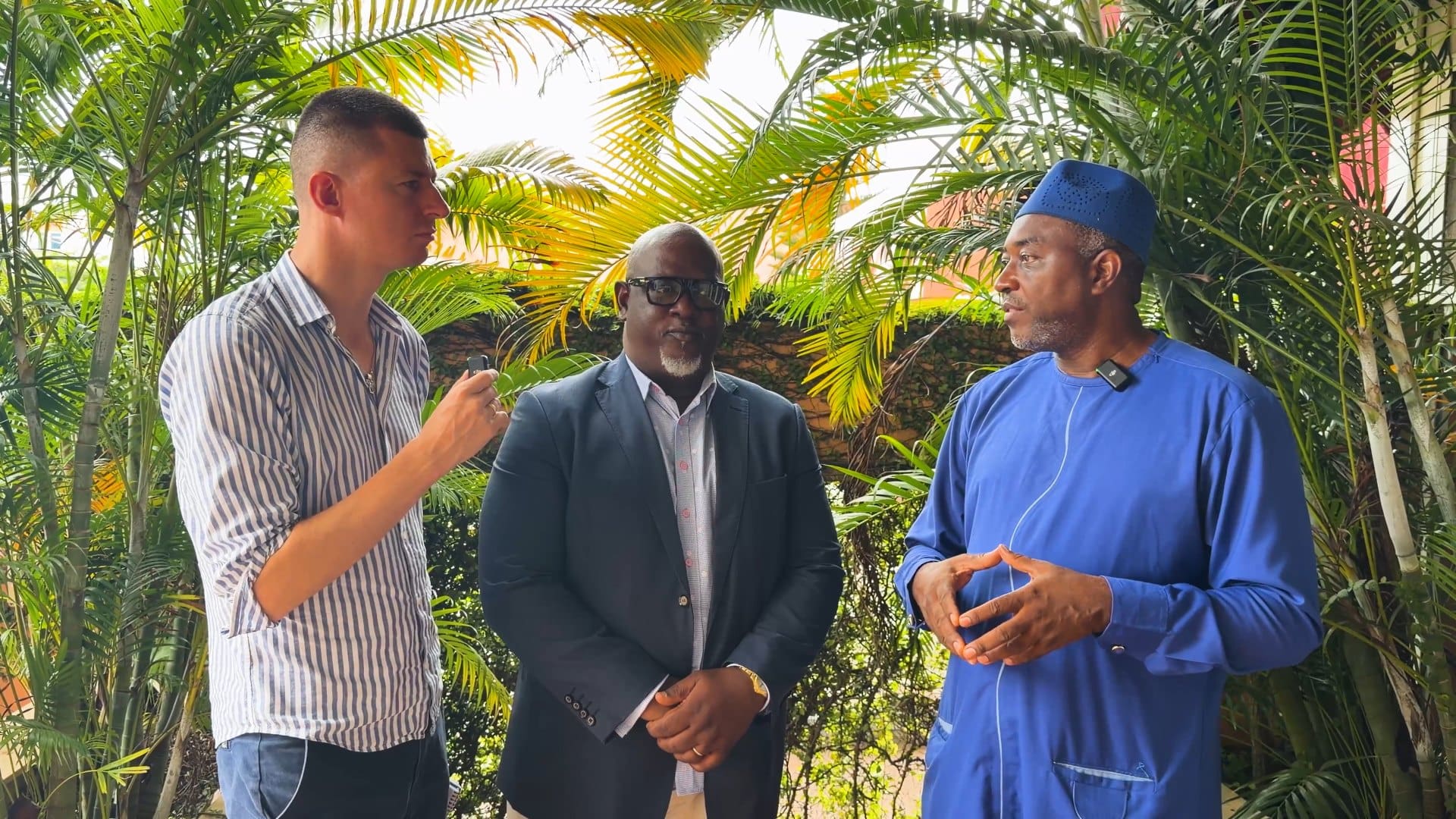
- We had a meeting with the Inter-Religious Council of Sierra Leone, after which we had a chance to chat with Reverend Tamba Eric M’baryo and Sheikh Ibrahim Barri, both executive members of the council. They talked about the long history of peace between followers of both religions, emphasizing again that even within the same family people sometimes follow two different ones.
- Counter to the assumptions of many, the Civil War in Sierra Leone was not fought on religious divisions, and was instead political and economic in nature.
- Nevertheless, the council was founded in 1997, in the middle of the war, as a way to contribute towards peace in the country.


Food, water, and a night out
- In Sierra Leone, like in many other West African countries, water is typically drunk from small plastic pouches sold on the street.
- We ate at Chicken Town, a local chicken restaurant. It ended up being Costa’s favorite meal of the trip. The restaurant is part of a poultry business we heard more about later in the week.
- In the evenings we went out. One place was a fairly polished lounge, with neon and mirrored walls. Another was a neighborhood bar where everyone was gathered around the pool table. Both were easy to walk into, and the atmosphere was relaxed.


Locals and daily life
- The population was highly sociable. People were welcoming and happy to talk, rap, and appear on video. Although it is important to note that filming or taking pictures without permission is extremely frowned upon, as is the case in much of Africa.
- English is the official language, used in government administration, higher education, and the media, but also spoken on the street. Krio is an English-based creole spoken by roughly 97% of the population as a first or second language. For a foreigner, this makes Sierra Leone one of the easier countries in the region to actually operate in.
- Sierra Leone is among the poorest countries in the world, with a GDP per capita of less than $1,000.
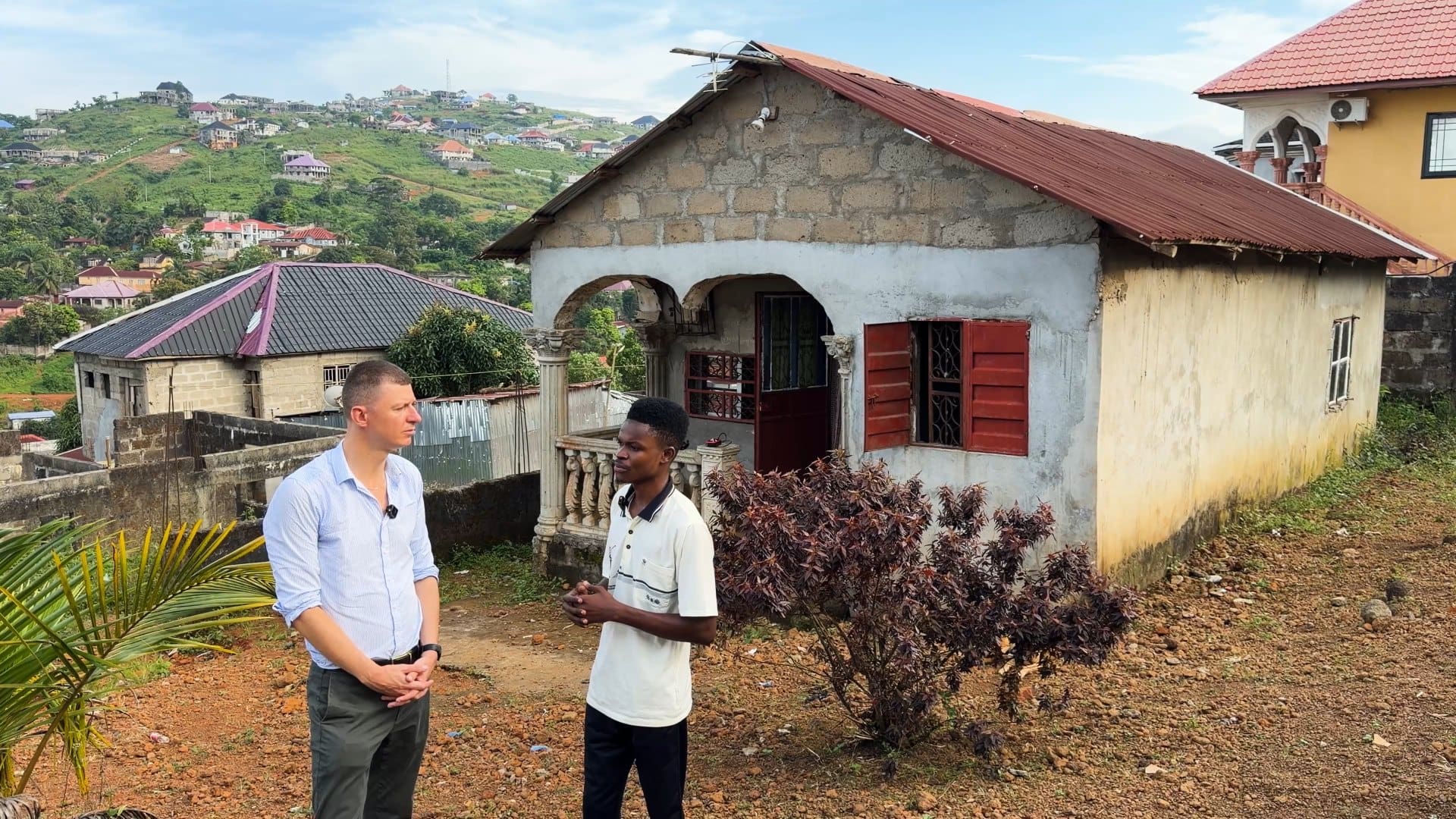
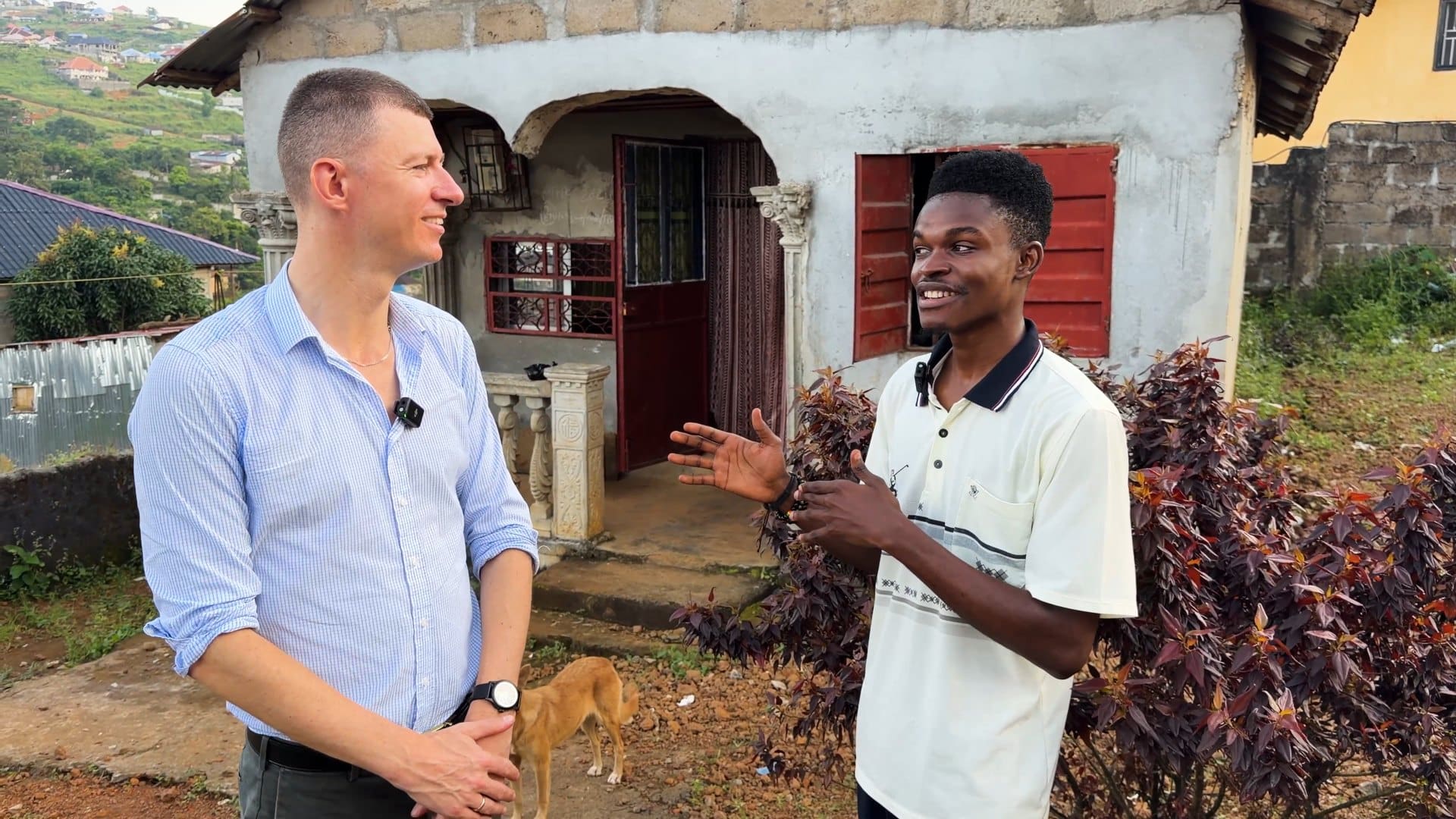
- Patrick, from the chimpanzee sanctuary, invited us over to his house, where we took the opportunity to see and experience the type of life locals live. Many people have small gardens and farms near their homes where they grow basic food supplies. His own house is a good example of the floor-by-floor building you see all over the hills.
- Patrick pays the equivalent of $250 per year in rent for a typical house with a living room, kitchen, bedroom, and bathroom.
- Many average citizens are banked and are now using online banking apps on their smartphones.
- Cellular data is considered expensive by locals. They are able to purchase it on a weekly basis from many providers, with 1GB costing around $3.
- Fees for higher education are difficult for many locals to afford. Patrick noted a master’s degree at a state university would cost him around $2,500.

The Immigration Department
We met the Chief Immigration Officer, Dr. Moses Tiffa Baio, for a discussion about the CBI program.
- Countries like Sierra Leone start CBI programs not only to attract investors and promote the country, but also to invest that money in their own governmental infrastructure.
- The process is made easy for investors and includes help, advisory, and assistance following a successful investment. The country views the CBI program as a real opportunity for growth.


Stephen Barnes and the Go-For-Gold program
Stephen Barnes is the architect of the Go-For-Gold citizenship program. Stephen and his team accompanied us on all the meetings organized as part of the delegation. We had already filmed a longer conversation with him about how the program is put together, in Sierra Leone Citizenship by Investment: a conversation with the program architect.
- He noted that there are many pending initiatives for growth coming from the government directly, some from the President’s office itself.
- Part of the point of the delegation is that prospective citizens can come and see the country before they commit. New citizens who had already gone through the program were on the same trip.
Banking
We met with several local banks to get an idea of what consumer and business banking facilities are like in the country. Since this trip, the program has also started including a locally incorporated company and a bank account for new citizens, which we covered in the update on the Sierra Leone Citizenship by Investment program.
- Ecobank, the pan-African bank, offers internet banking for personal accounts. It was the customer-service-focused one, and the best rated of the banks we saw.
- UBA, the Nigerian bank, quoted offshore charges of $35 fixed. The bank then charges 1% of the sum, depending on the amount, plus 15% government GST.
- Access Bank was actively and openly pitching for new clients. They were quite keen once they understood who was in the room.
- Banks in Sierra Leone are willing to meet and deal with foreign investors. If your CBI application is accepted by the government, that is proof enough for the banks that you are an upstanding individual.
- Banking in Sierra Leone is privacy-focused. The country is not signed up for CRS, so your banking information is not automatically shared with participating jurisdictions.
- Nevertheless, Sierra Leone is not really a place to use as a full-on offshore banking hub. It is practical to open an account and keep some money here as part of a Plan B, in the same way a local account is useful in other countries where you might actually spend time.
- Local banks are not afraid to deal with large sums in cash.
- There are no significant capital controls, though some do still apply to individuals, and there are no broad foreign exchange restrictions.
- Online banking is available, which makes day-to-day transacting straightforward.


Parliament
We had an unexpected opportunity to meet the Speaker of Parliament, the Honorable Segepoh Solomon Thomas, who was able to help us understand more about the tradition of the democratic process in Sierra Leone. We also had a tour of the Parliament chambers.
- Sierra Leone is focused on the future and on the betterment of its citizens’ lives as fast as possible, passing laws to unite the community and bring in investment that will allow the country to grow and provide for its people.
- New legislation focuses on improving the rights of women and children.


Culture
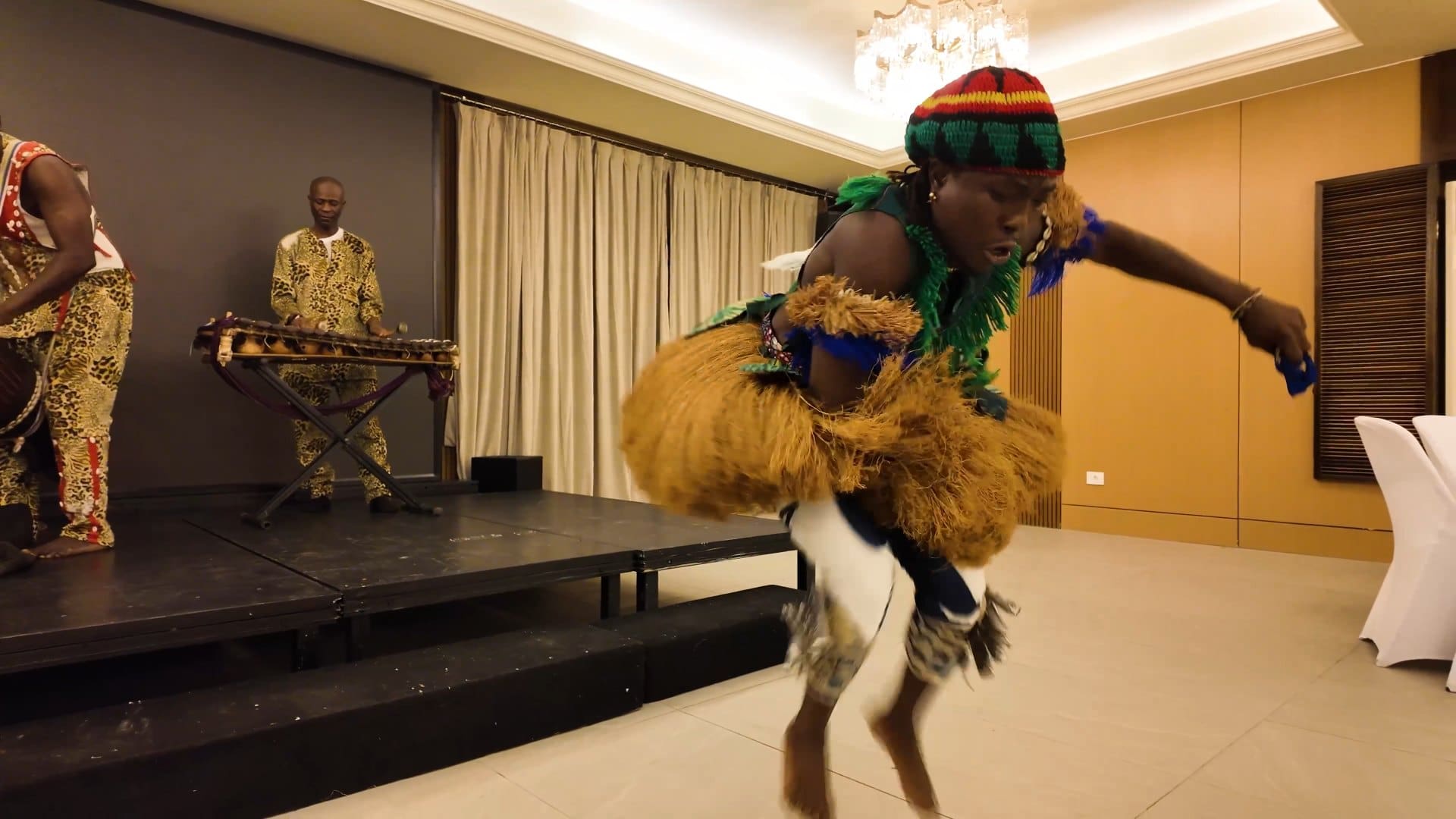
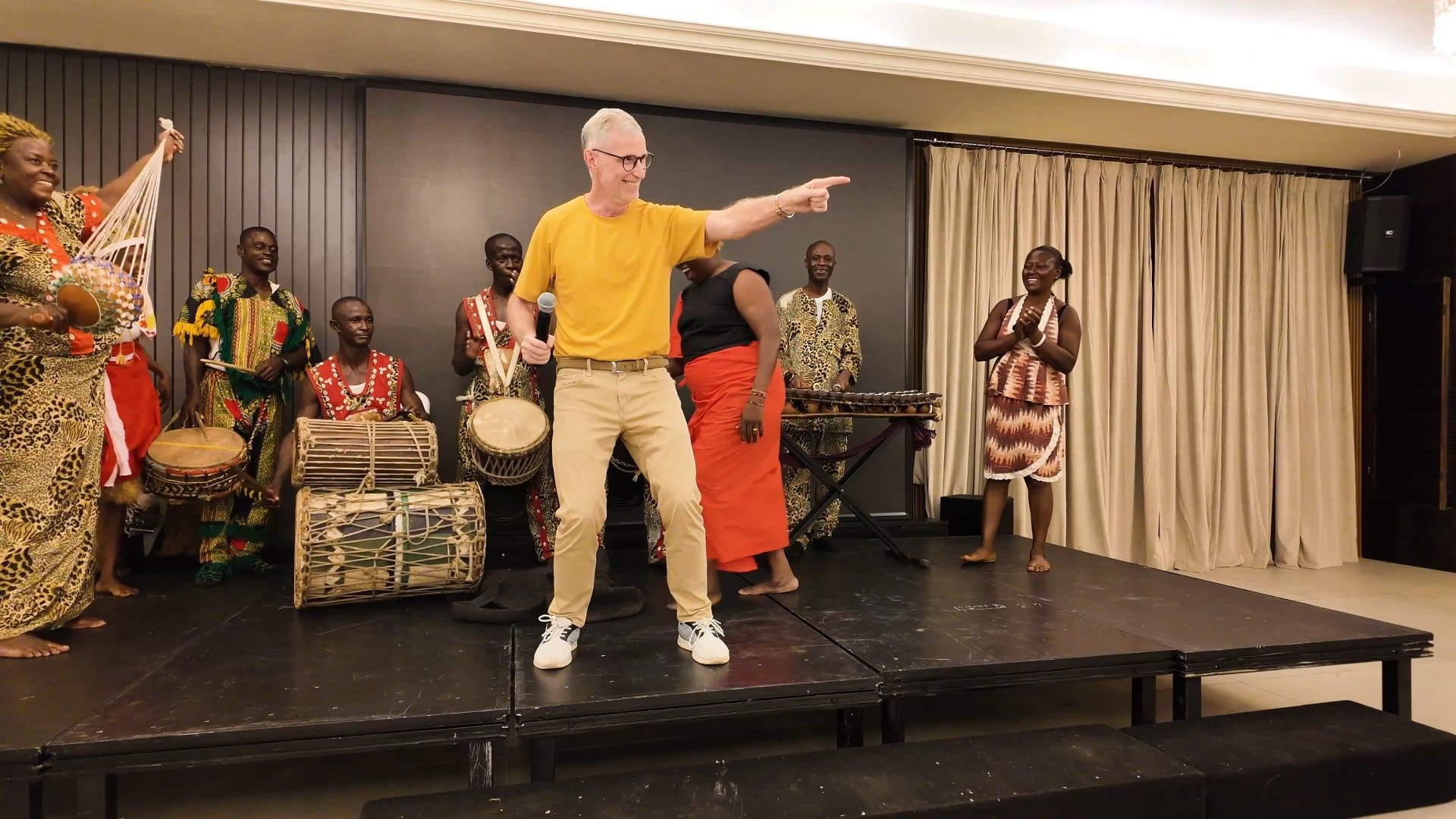
- We had a chance to experience a performance by a local dance and instrumental band using traditional instruments.
- Stephen decided to get up and dance with them.
- New citizens who joined the delegation also received a traditional welcome into the Sierra Leonean nation.
- We also stopped at Music Cafe by Cassava, a small place with a piano, guitars, and traditional instruments on the wall. It is a quieter way to hear music in Freetown if a stage performance is not what you are looking for.


The National Investment Board
We had a meeting with Dr. Edward Hinga Sandy, Executive Director of the National Investment Board of Sierra Leone, who is in charge of attracting foreign investment to the country. This sits with the public-private partnership work of the Office of the Vice President.
- The main areas of focus he described were agriculture, since Sierra Leone is still very much an agrarian society, infrastructure development, energy, where blackouts remain an ongoing issue, and tourism.
- They are very willing to provide all possible help to foreign investors. There is a clear understanding that investment is very much needed in the country.


New citizens on the delegation
New citizens among the investors attending the delegation participated in an official ceremony. The full fees, documents, and timelines are on the Sierra Leone Citizenship by Investment program page, and we have also written separately about who should apply.
- Investors who were part of the delegation came from France, the United States, and Germany, and from quite different fields. There was a university professor, a software developer, medical doctors, as well as investors focused on agriculture and renewable energy.
- Top-level government officials can be made available to assist investors and help them establish themselves and their businesses in the country.
- The base investment is $100,000 for the main applicant if applying without dependents. The main applicant donation for families starts at $140,000 plus dependent fees. Families with a main applicant who can prove continental African descent via a DNA test can apply starting at $120,000 plus dependent fees.
- It is possible to obtain the citizenship remotely, but obtaining a National ID requires submitting your biometrics locally, in-country.
Tourism and eco-lodges
We had the opportunity to interview Mr. Mohamed Jalloh, Director at the Ministry of Tourism and Cultural Affairs. He explained the Ministry’s initiatives for investors creating eco-lodges in Sierra Leone.
- There is an abundance of animal and plant species in the country, as well as green plots of land, which are accessible by road and connected to the grid. Such opportunities are not only around Freetown, but also close to the country’s national parks.
- Those plots are available to investors on a free lease, for people who want to build eco-trails, campsites, botanical gardens, or recreational leisure areas, but also meeting or conference spaces.
- Based on the research done for the Ministry, the ROI is about 15% on such investments.
- The Ministry promises help with finding suitable land and with all the processes connected to it.


Energy
We had a brief interview with the Deputy Minister of Energy, Dr. Abdul Rahim Jalloh.
- Sources of energy in the country consist of hydropower, solar power, and thermal power.
- Additionally, energy is purchased from neighboring Guinea and Ivory Coast.
- There is only one transmission line, with an operational capacity of 60 megawatts, which is not enough for the country’s power needs. There are plans to increase this to 90 megawatts.
- There are also plans to develop Northern and Southern transmission lines, so that power can actually be carried through to the capital.
- The Ministry is actively looking for partners for those projects.
- There is also a pressing need to upgrade Freetown’s distribution network. Generating more power only helps if the city grid can carry it.

Tacugama Chimpanzee Sanctuary
The delegation took us to Tacugama Chimpanzee Sanctuary, only a short drive from Freetown. The visit was a good illustration of the eco-lodge incentives the Ministry of Tourism and Cultural Affairs had just described to us.
- We had a chance to talk with Patrick Bantamoi, an environmental conservationist and data analyst at the sanctuary, and one of the many people on staff who is genuinely passionate about the work.
- We also met Bala Amarasekaran, the founder and director. The sanctuary is looking for partnerships so that it can continue its mission and do even more in conservation.
- The work spreads outside the sanctuary itself. They work with three national parks and with local communities to monitor chimpanzee behavior, carry out research, and educate people about the species.
- There are 123 chimpanzees in the sanctuary, and around 5,500 monitored in the wild.
- The chief mission is protecting chimpanzees living in the wild, so that they do not end up in the sanctuary after being orphaned. Poaching in Sierra Leone is still an issue.


Truestone and a poultry business
We held a meeting with Paul Szkiler, CEO of Truestone Impact Investment Management, a UK-based impact investor that provides capital and expertise to stimulate growth in Africa, especially in Sierra Leone.
- We also had a chat with Stuart Henderson, general manager of C4 Africa. They operate a chicken farm to meet high local demand for both meat and eggs, most of which is currently imported.
- We spoke with Jeppe Bakmand, Truestone’s portfolio director, who noted that combining investment and know-how can drastically improve local egg production.
- The company also has a chicken restaurant in its portfolio, Chicken Town, which was Costa’s favorite.
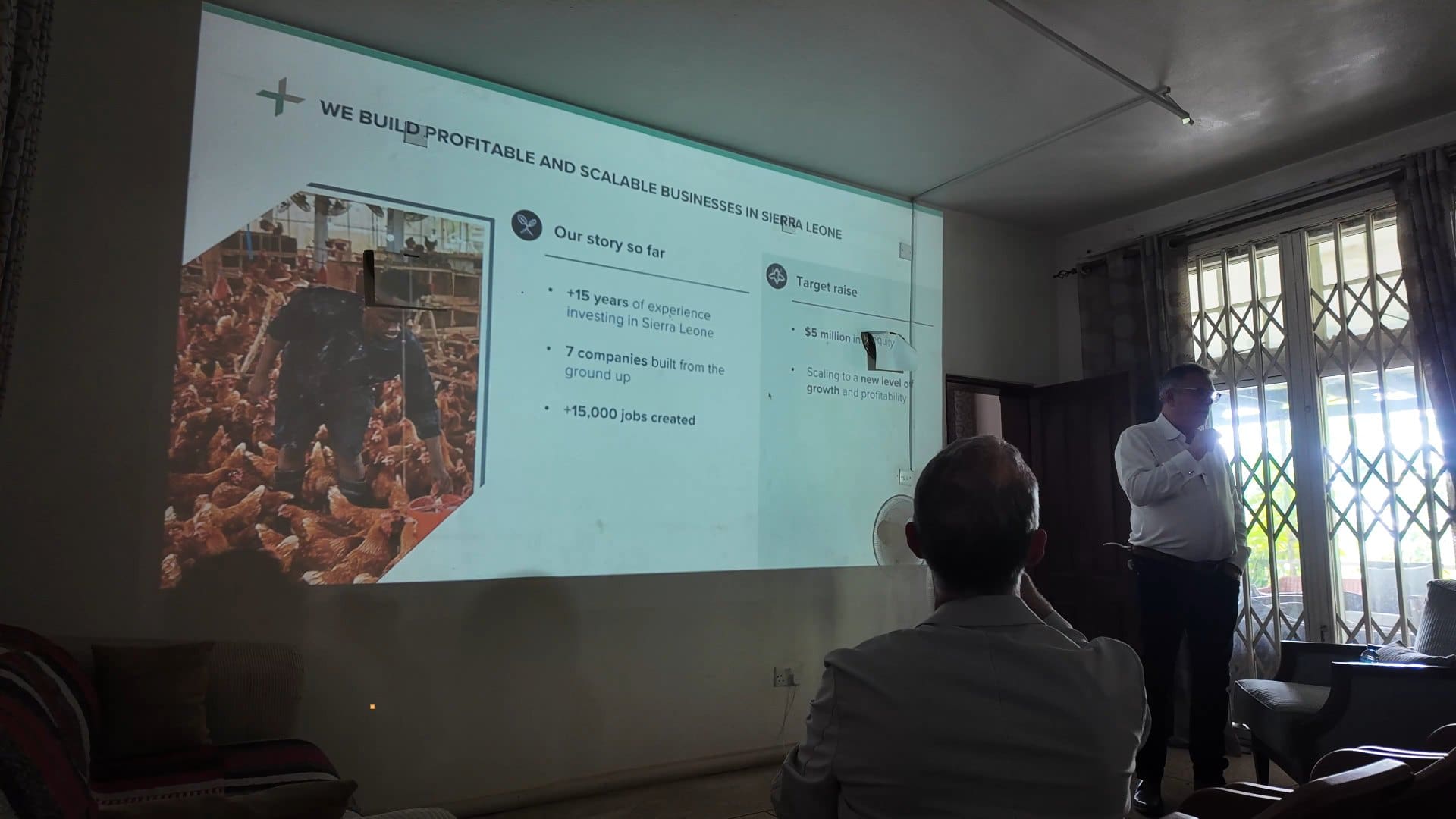
- On the slide they walked us through, they cited more than 15 years of investing in Sierra Leone, seven companies built from the ground up, and more than 15,000 jobs, with a target raise of $5 million so they can scale further. Those figures come from their own presentation.

Final thoughts
- It is an English-speaking country, which is genuinely practical. Meetings with ministers, meetings with bankers, and conversations on the street all happened in English, and Krio is close enough that you can follow a good part of daily life as well.
- The religious tolerance is real. You see it inside families, not only in official meetings, and that makes the country feel more comfortable than a lot of people would assume before arriving.
- The government is openly looking for investors. We heard the same message at the National Investment Board, at the Ministry of Tourism with the eco-lodge land, at the Ministry of Energy with the transmission projects, and from the banks, who were actively trying to sign the delegation up.
- It is still one of the poorer countries in the world. Power is a real constraint, the airport sits on the other side of the water with no bridge yet, and everyday life for most people is a long way from a middle-income city. You have to go in with your eyes open about that.
- The new citizens who came with the delegation were recognizable people. Medical doctors, a university professor, a software developer, and investors in agriculture and renewable energy. Senior officials made time for them.
- Banking is usable, and because Sierra Leone is not signed up to CRS it has a place in a Plan B, as a local account and, since this trip, a local company included with the program. It will not replace a proper offshore bank.
- We spent a similar week on the ground in São Tomé and Príncipe, which is the other low-cost African citizenship program, if you want to compare the two directly.
Apply through The Wandering Investor
The Wandering Investor is a licensed agent of the Sierra Leone Citizenship by Investment program. We do not charge any additional agency fees on top of the official donation. Individual applicants may apply for $100,000 and two unrelated applicants can apply for a total of $165,000 all-in. As for families, you are looking at $140,000 for the main applicant, or $120,000 if you can demonstrate continental African descent through a DNA test, plus $10,000 for each normal dependent and $20,000 for each special dependent.
The detailed pricing, requirements and timelines are all on the Sierra Leone Citizenship by Investment program page. If you want to discuss your specific case, book a call with our team and we will walk you through it.
CBI Program Specialist The Wandering Investor
Services in Sierra Leone:
Articles on Sierra Leone:
- Sierra Leone Citizenship by Investment – a conversation with the program architect
- Sierra Leone Citizenship by Investment program – Who should apply?
- On the Ground Diligence for the Sierra Leone Citizenship by Investment
